
35th District Lawmakers Secure Millions for Highway 3 Corridor, Defeat Budget Cuts and Address Toxicology Backlog
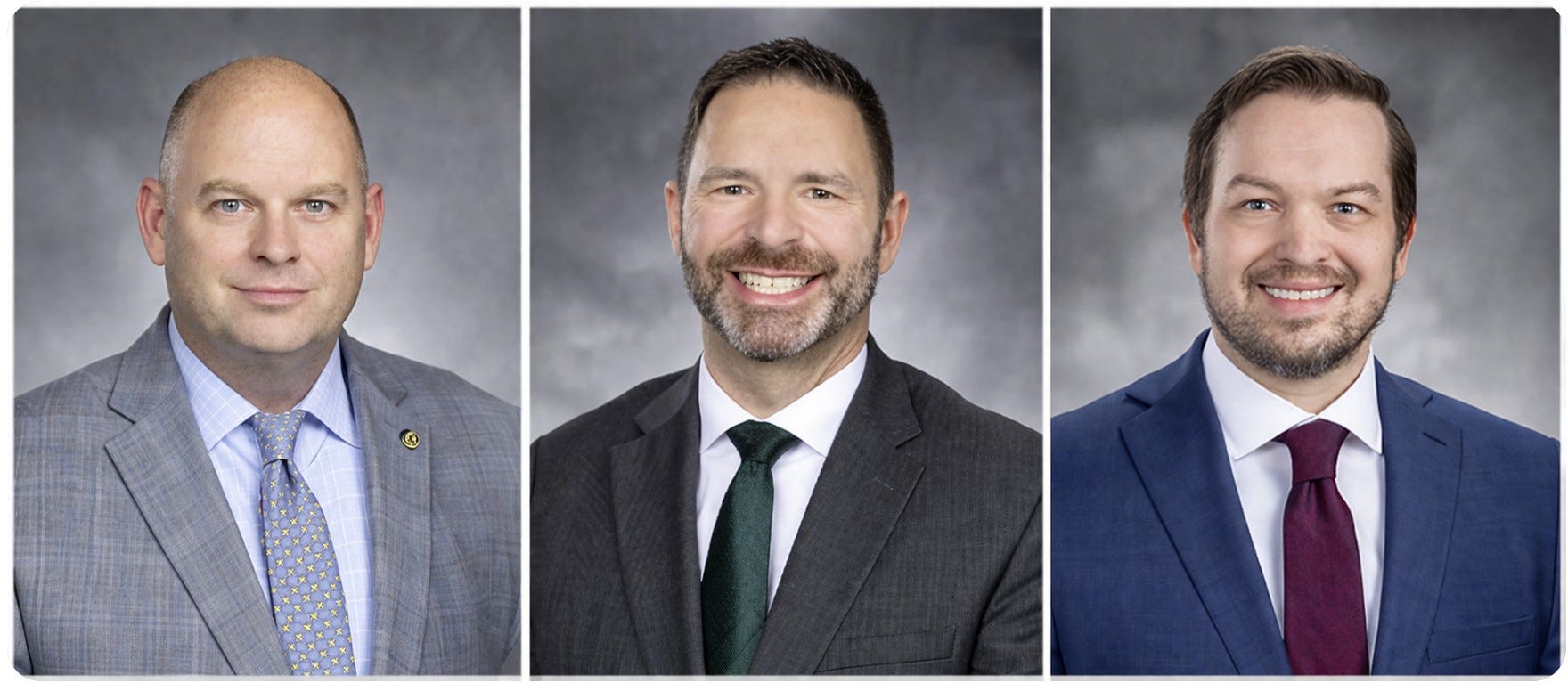
State lawmakers representing the 35th Legislative District successfully fought off proposed cuts to secure major funding for the Highway 3 Freight Corridor, according to a joint press release issued Thursday.
Senator Drew MacEwen (R-Shelton), Representative Dan Griffey (R-Allyn), and Representative Travis Couture (R-Allyn) announced that the newly passed supplemental capital and transportation budgets include nearly $44 million to keep the long-term Highway 3 project on track.
The 35th District legislative team noted that protecting the project was a top priority this session after the governor’s proposed budget, released in December, threatened it with cuts and delays.
“Early indications suggested this project might face further delays or be pushed down the priority list,” Sen. MacEwen stated.
“For far too long, our commuters and local businesses have dealt with grueling congestion that does more than just waste time; it compromises the safety of our community.”
Often referred to as the Belfair Bypass, the Highway 3 Freight Corridor project is designed to skirt Belfair and create a much-needed alternative route for through-traffic.
By diverting freight and regional travelers away from the city center, the project aims to drastically decrease volume in Belfair while providing a faster, more reliable route between Kitsap and Mason counties.
Lawmakers successfully allocated $42.6 million for Phase 2 of the SR 3/Belfair Area widening and safety improvements to keep the long-awaited project moving.
Addressing the DUI Testing Crisis
Beyond local transportation, the legislative trio also successfully pushed for over $4 million in additional funding to fix a massive, statewide bottleneck at the Washington State Patrol toxicology lab.
The state lab is currently suffocating under a backlog of roughly 16,000 cases, causing DUI test results to take anywhere from 10 months to two years to process.
This severe delay routinely leaves potentially impaired and dangerous drivers on the road while prosecutors wait for hard evidence.
The consequences of this backlog have been fatal in the 35th District. Rep. Griffey highlighted a tragic incident where state troopers took a blood sample from a driver suspected of being high on drugs after a crash in Belfair in January 2024.
Because the lab results were delayed for over a year, the driver remained on the road and subsequently crossed into oncoming traffic near the Key Peninsula, striking and killing a motorcyclist.
The new funding will be used to expand the lab’s capacity by adding much-needed staff and equipment. The budget victory also coincides with a new state law that allows accredited private laboratories to process DUI blood and breath tests to help clear the backlog faster.
Local Capital Wins
In addition to the Highway 3 corridor and the toxicology lab funding, the lawmakers highlighted the inclusion of funding for the Mason County 911 modernization and relocation project as a major capital budget victory.
“When someone calls 911, every second matters,” said Rep. Griffey. “This is a critical investment for public safety and for the people behind the scenes who help save lives every single day.”
Rep. Couture emphasized that the investments extend beyond transportation to ensure broader community resilience.
“From a modern 911 center and stable power grids to the water systems that support our growing neighborhoods, these projects will make life in the 35th District more affordable and safer,” Couture said.
Other key transportation and capital budget allocations secured for the 35th District include:
Skokomish timber land acquisition: $2.02 million
US 101/SR 3 safety jersey barriers: $2 million
Squaxin Island Tribe paratransit support program: $1.4 million
Community preservation, education, and economic development: $968,000
Squaxin Transit Service Support: $464,000
Mason County 911 modernization and relocation: $433,000
Wallace Kneeland and Shelton Springs Road intersection improvements: $300,000 in the current budget, with an additional $2.85 million slated for 2027-2029
Mason PUD 1 grid resilience projects: $103,000