
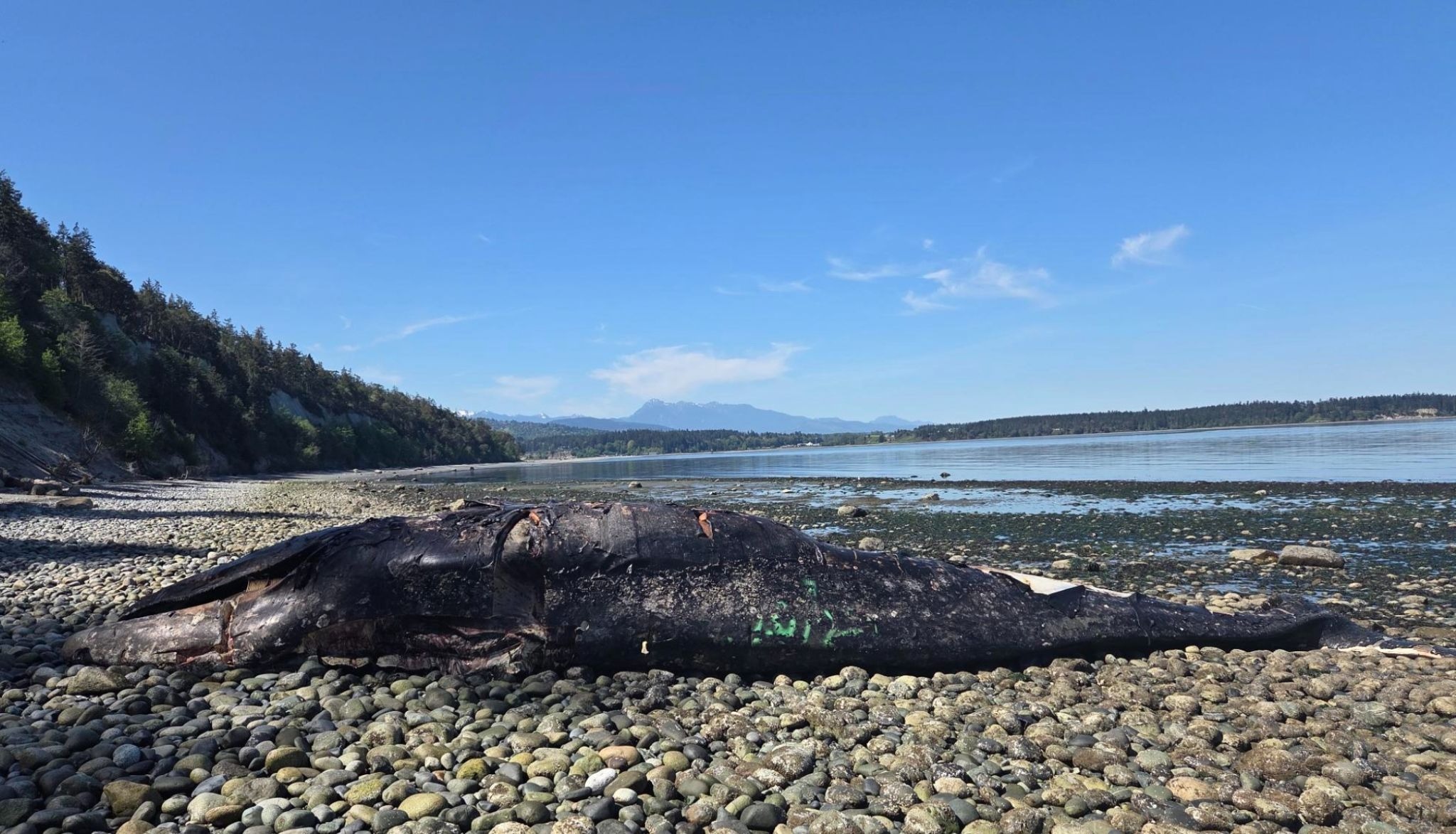
A decaying carcass of a male gray whale has greeted beachgoers at Panorama Vista County Park in Clallam County in recent weeks, serving as a stark local reminder of a growing ecological crisis playing out across the pacific coastlines.
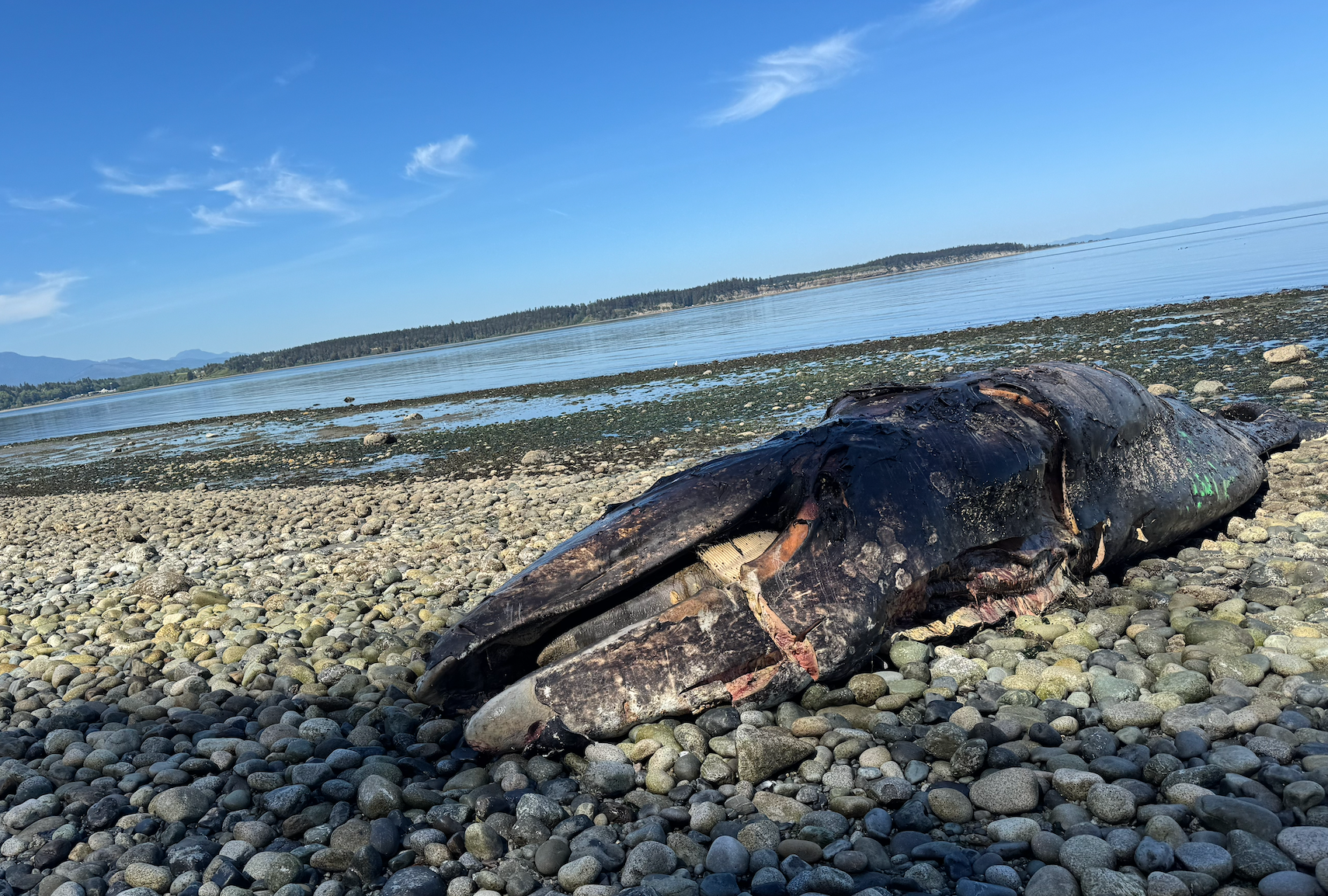
According to data released by the Cascadia Research Collective, this particular whale is believed to have died on April 17.
Examinations of the remains indicated signs of both severe malnutrition and trauma, adding another tragic data point to an already devastating spring for the species.
High Strandings
Unfortunately, the Sequim whale stranding is not isolated. Wildlife researchers are sounding the alarm as the number of gray whale deaths in Washington state has surged to an unprecedented 17 strandings between March and April of this year.
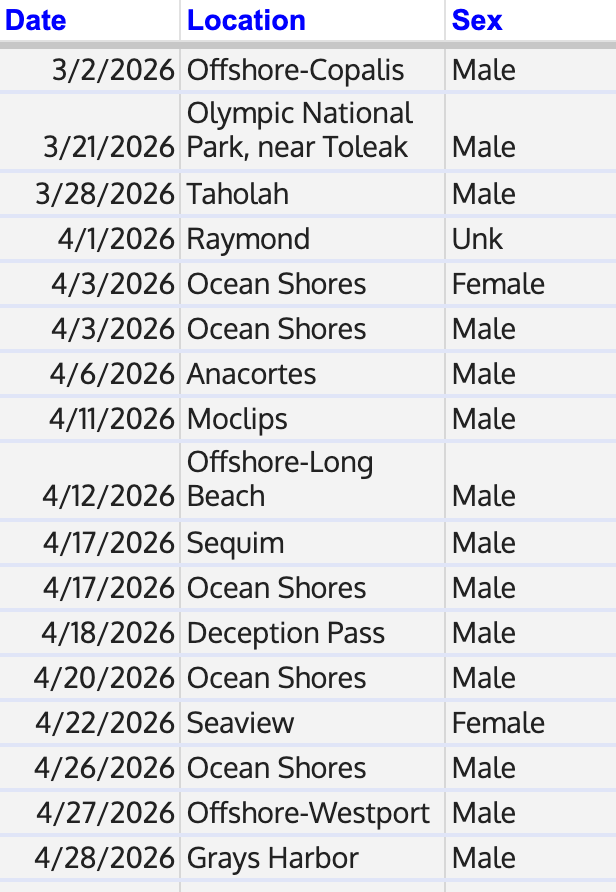
This represents the highest annual number of strandings by this time of year that researchers have ever recorded.
Gray whale strandings in Washington typically occur between April and June, when the animals migrate along the coast to their summer feeding grounds in the Bering Sea.
In normal years, the state averages about five gray whale strandings annually. However, since the onset of an Unusual Mortality Event, declared in 2019, that average has spiked to over 15 per year.
A Problem Across The Pacific
The eastern North Pacific gray whale undertakes one of the longest mammalian migrations on Earth, traveling up to 12,000 miles round-trip between winter breeding lagoons in Mexico’s Baja California and summer feeding grounds in the Arctic.
Tragically, along this entire route, whales are washing ashore at an alarming rate. According to the latest Unusual Mortality Event tracking data from NOAA Fisheries, at least 47 gray whales have stranded dead on the U.S. West Coast, a sharp increase from 31 by this time last year.
Beyond Washington’s borders, Oregon has recorded at least three strandings this spring, while California has seen concerning numbers—particularly in the San Francisco Bay, where at least nine whales have died so far in 2026. Reports of emaciated, dying whales have also poured in from the coastal lagoons of Mexico.
Shifting Ecosystems
The root of this coast-wide die-off lies far to the north. Scientists point to warming waters and shifting ecosystems in the Arctic and sub-Arctic feeding grounds.
As sea ice coverage diminishes, so does the algae that grows beneath it, which in turn feeds the small crustaceans that make up the bulk of a gray whale’s diet.
Staring down a collapsing food web, whales are beginning their immense southward and northward migrations without the critical fat reserves necessary to survive the journey.
This starvation forces desperate whales to break off from their migration routes into unusual, highly trafficked areas in search of food—such as the San Francisco Bay, Puget Sound, and even the Willapa River.
In these congested waters, weakened whales become far more vulnerable to fatal vessel strikes and fishing gear entanglements.
The cumulative toll on the population has been staggering.
Since 2016, the eastern North Pacific gray whale population has plummeted by roughly half, dropping from a peak of nearly 27,000 individuals to an estimated 13,000 today—the lowest count since the 1970s.
Calf production is also hitting record lows. Just 85 calves were counted migrating past California last year, the lowest since records began in 1994.
What the Public Can Do
As the migration season continues, officials brace for more strandings in the coming weeks. Researchers are urging the public to be vigilant and respectful.
Boaters are reminded to avoid transiting at high speeds in areas with known whale concentrations and to give the animals plenty of space.
If you encounter a stranded, injured, or dead marine mammal on the beach or in the water, please do not approach or touch the animal. Instead, immediately report the sighting to the West Coast Marine Mammal Stranding Network Hotline at 1-866-767-6114.
For local large whale strandings in Washington State, you can also contact the Cascadia Research stranding hotline directly at 360-791-9555. Providing the date, time, specific location, and photos can be crucial for response teams working to understand and mitigate this ongoing tragedy.
Support The Olympic Herald
If this story mattered to you, help us report the next one
The Herald has no paywall and no corporate owner. Reader support is what pays for the records requests, court hours, and follow-through that accountability reporting takes.
Become a monthly supporter
Steady, recurring support is what lets us commit to long investigations instead of chasing quick hits. Members get no special perks — just the knowledge that fearless local reporting exists because of them.
$10/mo
or
$100/yr
Become a member
Cancel anytime · Secure checkout via Stripe
Give once with a card
Pick an amount below — secure Stripe checkout takes under a minute.
Want to give a different amount? Choose your own →
Secure checkout via Stripe · No account required
Republish this story
Our stories are free to republish, online or in print, under these rules:
- Credit The Olympic Herald and the author, and link back to this story.
- Don't edit the story except for style, length, or to update time references.
- If you republish online, use our canonical URL so search engines credit the original.
- Don't sell the story or use it primarily to sell advertising.
Questions? Contact us.