
Washington Man Convicted in Deadly Fentanyl Trafficking Scheme That Killed Two in Alaska
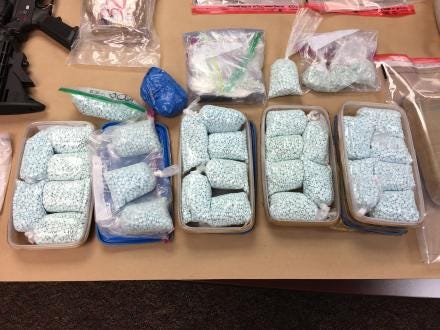
A 34-year-old Spokane man has been convicted by a federal jury for his role as the source of a deadly interstate drug trafficking scheme that introduced fentanyl into a remote Alaskan community, leaving two men dead.
Following a five-day trial in Juneau, Alaska, Jacob Cotton of Spokane was found guilty on Wednesday, March 25, 2026, of distributing the fentanyl pills that resulted in the fatal overdoses in the coastal town of Skagway.
The Economics of the Conspiracy
According to court documents and evidence presented at trial by the U.S. Attorney’s Office for the District of Alaska, the lethal enterprise was driven entirely by the stark geographical differences in the illicit drug market.
Over a rapid 13-day window between January 1 and January 13, 2023, Cotton entered into an agreement to sell and mail approximately 150 fentanyl pills to an individual for distribution in Alaska.
The explicit objective of the conspiracy was to exploit Eastern Washington’s illicit drug market. The plan called for Cotton to purchase the fentanyl locally in Spokane at a cheaper price, and then ship the deadly narcotics north to Alaska.
Once the drugs arrived, the co-conspirators planned to charge a massive premium price for the pills in Skagway, with Cotton and his associate agreeing to split any of the resulting distribution proceeds.
A “Dry” Community Shattered
The influx of the Spokane-sourced pills through the mail had a swift and catastrophic impact on the small Alaskan municipality.
Federal prosecutors noted that at the time Cotton and his associate orchestrated their agreement, Skagway was considered “dry.” This meant that prior to Cotton mailing his package from Eastern Washington, there was no fentanyl available within the community.
The sudden introduction of Cotton’s 150 pills abruptly ended that status, directly resulting in the overdose deaths of two local men.
While the trial has concluded with a guilty verdict, the case serves as a grim warning about the growing trend of drug traffickers utilizing Washington cities as staging grounds.
By leveraging cheaper local prices, traffickers are increasingly treating Washington as a supply hub to flood isolated, vulnerable communities across the Pacific Northwest and Alaska with lethal synthetic opioids.
In this specific case I would be 100% in favor of a "death sentence" for ALL of the coconspirators that led to the murder of the two victims~! What happened to the rest of the lethal pills? Where and who did these lethal "pills" come from? It is time to apply the law when the REAL lethal drugs are distributed to Americans~! It is time for the government to end its fraudulent false information attacks on non-lethal drugs, so that ALL Americans have a fighting chance to know the truth about all of the different drugs and which ones are in fact a risk to their lives and health~! I blame a LOT of this on the criminals within government, the politicians, and ALL others who have obviously lied about cannabis and other non-lethal drugs, because that has directly resulted in a deep mistrust in our country of those who lie for a living~! Americans NEED to know the truth between the truly lethal VS the non-lethal illicit AND pharmaceutical drugs that flood our country~!!!
Sincerely, Mike
Will say I am at a point where if you sell fent. adding a charge also of attempted murder besides the distributing.