
Clallam County Judge Basden Facing New CJC Complaint
In 1844, when the Nauvoo Expositor dared to publish the inconvenient truth about an authoritarian’s secret shadow government, LDS founder Joseph Smith didn’t answer with free speech—he ordered a heavily armed posse to smash the printing press with sledgehammers.
Today in Clallam County, we are no longer smashing printing presses in the streets, but the fundamental tactic remains exactly the same. Instead of a violent mob, local leaders are attempting to weaponize the civil court system to silence uncomfortable truths.
Tomorrow afternoon, a Kitsap County judge will determine if I will be ordered to remove over thirty of my articles exposing the Clallam County Superior Court, the curtain is finally being pulled back on the local judiciary.
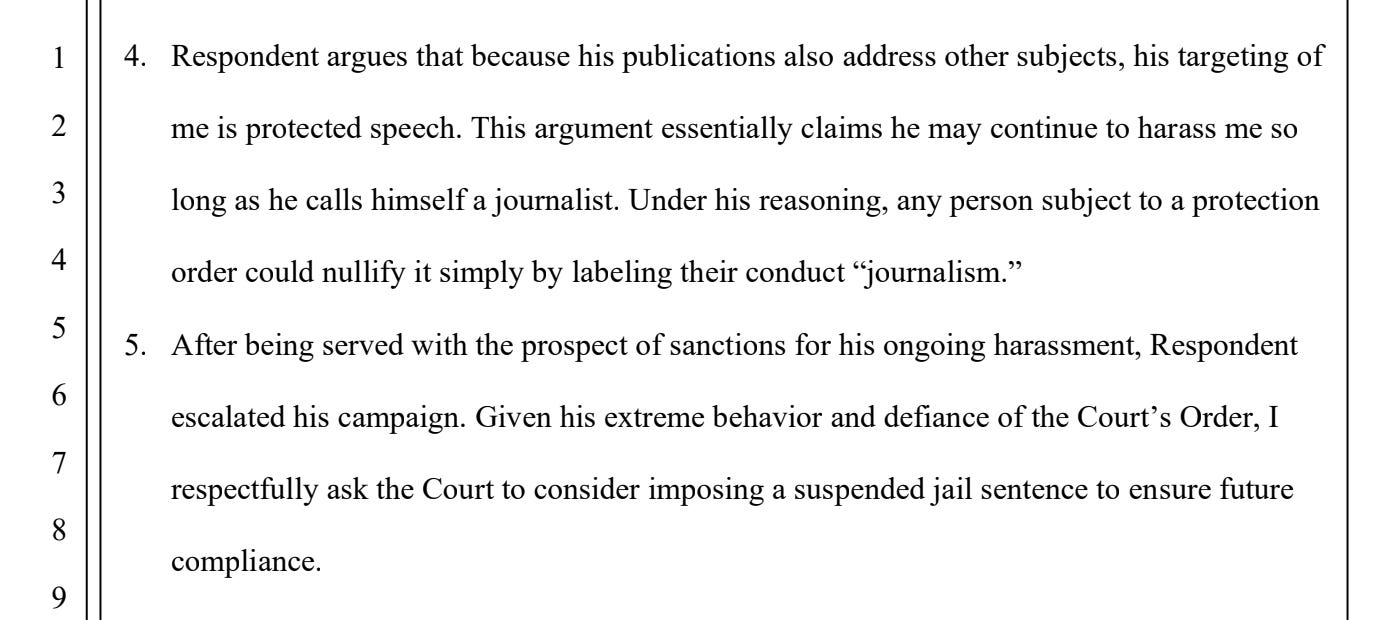
Judge Basden’s LDS subordinate, Elder Mavy, is now requesting the Kitsap County Judge sentence me to jail.
Earlier today, I filed a complaint with the Washington State Commission on Judicial Conduct against Clallam County Judge Brent Basden.
The grievance lays out a devastating indictment of the Clallam County bench, detailing a “troubling pattern of behavior wherein Judge Basden has repeatedly allowed his private relationships, localized ecclesiastical authority, and internal administrative maneuvers to irreparably compromise his neutrality on the bench.”
According to the complaint, Judge Basden allegedly utilizes his secular authority to protect his religious associates, silencing a free press, and resurrecting an archaic, 19th-century system of shadow justice right here in Washington State.
Shielding a Serious Sin
The underlying issue that sparked this constitutional crisis involves a frivolous case brought against me by LDS Elder Benjamin Mavy.
According to public records cited in my complaint, in July 2025, Mavy was criminally charged by the Wyoming Game and Fish Department after making false statements to unlawfully obtain an elk. Just eight days after being formally charged with this crime of deceit, Mavy sought a civil protection order in the Clallam County Superior Court.
As the complaint details, Mavy’s filing was a “transparent attempt to weaponize the Clallam County Superior Court, seeking to classify [my] rigorous, First Amendment-protected investigative reporting on Mavy’s criminal conduct as actionable ‘harassment.’”
Crucially, my complaint points out that Judge Basden’s Bishopric was formally put on notice of Mavy’s false swearing nearly two years prior.
On November 8, 2023, during another court proceeding involving Mavy—which Judge Basden presided over—documentary evidence was submitted proving his systematic perjury to obtain Wyoming hunting licenses.
According to the complaint, Judge Basden retained control over the retaliatory protection order proceeding for six months—from August 2025 until a “heavily delayed, strategic recusal” on February 23, 2026.
The complaint alleges that during that critical half-year window, Judge Basden concealed profound conflicts of interest while utilizing his judicial authority to issue orders protecting Mavy from journalistic scrutiny.
The Architecture of a Shadow Court
As outlined in the complaint, from 2002 to 2007, Judge Basden served as an LDS Bishop, operating as the “absolute spiritual, financial, and administrative authority over a specific congregation.”
From 2010 to 2019, he served as the Stake President—the paramount executive leader for the entire Port Angeles region.
More recently, Judge Basden operates as a Counselor in the Bishopric. As the complaint notes, citing the official LDS General Handbook, the bishop and his counselors do not act independently. They “form a bishopric” and operate as a unified executive body.
The institution explicitly dictates that this three-man presidency must “Never make a major ward decision without counseling together and having unanimous approval and support.”
Furthermore, LDS doctrine establishes that these leaders are not passive spiritual guides. The canonized scripture of the church explicitly designates the bishopric to act as a “common judge” whose divine mandate is to “sit in judgment upon transgressors.”
This parallel system is anchored in the LDS’s foundational scripture, which mandates internal ecclesiastical trials for transgressors, directing that “every word” of an offense “shall be established against him or her by two witnesses of the church, and not of the enemy.”
The CJC complaint explicitly links this structure to the historical suppression of the press and the supplanting of civil law:
“This behavior perfectly mirrors the historical, 19th-century LDS practice of operating ecclesiastical shadow courts.”
Historical records cited in my complaint establish that early LDS leaders actively punished members who sought secular justice—such as the April 1838 excommunication trials of Oliver Cowdery and Apostle Lyman E. Johnson, who faced severe discipline explicitly for the perceived impropriety of suing another member at civil law.
Best Friend
According to the complaint, between 2023 and 2026, Benjamin Mavy served as an ordained LDS Elder, residing within the exact geographic and ecclesiastical boundaries overseen by Judge Basden’s presidency.
The complaint argues this placed Mavy directly under the disciplinary oversight and mandatory interviews governed by the Judge’s unified, three-man executive body.
The conflict of interest goes far beyond shared geographic boundaries. Judge Basden’s immediate ecclesiastical partner and co-counselor is High-Priest Matt Kiddle.
The complaint asserts that Kiddle maintained an “exceptionally close personal and financial relationship with Mavy.” In fact, Mavy frequently resided at Kiddle’s home and publicly identifies Kiddle as his best friend.
During a 2025 trial, Mavy openly weaponized this social proximity under oath on the record, boasting: “Um, Judge Basden and I share one of my closest friends.”

Under Washington’s Appearance of Fairness Doctrine, a judicial proceeding is only valid “if a reasonably prudent and disinterested observer would conclude that all parties obtained a fair, impartial, and neutral hearing.”
My complaint argues Judge Basden blatantly violated CJC Rule 2.4(B)—which strictly prohibits a judge from permitting social relationships to influence judicial conduct—by maintaining control of the case while Mavy openly boasted about his social conduit to the bench.
This conduit allegedly spilled into the streets of Clallam County. While Judge Basden sat on the civil bench presiding over my case, the complaint alleges that High-Priest Kiddle—Basden’s mandated co-counselor—was actively functioning as Mavy’s proxy.
According to the grievance, when Mavy violated a police-issued trespassing notice regarding my property in July 2025, Mavy “utilized a truck belonging to High-Priest Kiddle” to evade law enforcement.
Most egregiously, the complaint outlines how in December 2025, Kiddle “physically traveled to [my] residence to execute the legal service of a subpoena on Mavy’s behalf” for a legal matter over which Judge Basden was actively presiding.
Institutional Ex Parte Briefing Rooms
The Washington Code of Judicial Conduct strictly prohibits a judge from utilizing out-of-court, “ex parte” information concerning an impending matter (Rule 2.9) and mandates disqualification when a judge possesses “personal knowledge of facts that are in dispute.” (Rule 2.11).
The CJC complaint alleges that the LDS structure functions as a formalized engine for these exact violations.
Because Judge Basden and Matt Kiddle serve as co-counselors, the grievance notes they are structurally mandated by the General Handbook to engage in “highly confidential, weekly deliberations” in Ward Council meetings regarding the strengths and needs of congregants—which includes Mavy.
“Here, the structure of the Ward Council ensures Judge Basden receives an ongoing, institutionalized stream of prohibited ex parte information regarding Mavy’s domestic, personal, and legal affairs,” the complaint argues. “This environment functions as a formalized ex parte briefing room, exposing Judge Basden to out-of-court information…”
According to the grievance, this asymmetric knowledge extended to finances. Impartiality demands that a judge adjudicate based only on evidence presented in open court.
Yet, the LDS General Handbook strictures enforce the “companionship principle,” meaning Judge Basden and his co-counselor “open each envelope together” to verify tithing contributions.
Because tithing is strictly defined as “one-tenth of one’s income,” the complaint states that access to this database “provides the Bishopric with a precise, real-time proxy of a litigant’s gross income.”
Through these duties, the complaint contends, “Judge Basden possessed systemic, out-of-court access to Mavy’s domestic and financial realities, completely concealing this asymmetric knowledge from [me] and circumventing the civil discovery process.”
Dual Adjudication
Perhaps the most explosive allegation in the complaint involves the concurrent, dual adjudication of Mavy’s crimes.
The retaliatory civil protection order brought against me was designed to silence my reporting on Mavy’s criminal false swearing in Wyoming.
However, false swearing is not just a civil matter. Under the General Handbook, “Fraudulent acts” are categorized as “serious sins” that mandate an internal church investigation. The church explicitly lists “Perjury” as a behavior where a “Membership Council May Be Necessary.”
The complaint argues this meant Judge Basden was sitting in judgment over Mavy in a Clallam County courtroom, while simultaneously sitting in confidential deliberation as a “common judge” to weigh the spiritual consequences of Mavy’s exact same false swearing behind closed church doors.
The conflict is absolute. The church mandates a strict gag order on these internal proceedings. The LDS manual dictates that bishops and counselors “have a sacred duty to protect all confidential information shared with them.”
As my complaint concludes:
“A civil judge cannot impartially adjudicate a reporter’s First Amendment right to report a crime when that same judge is commanded by a sacred duty to protect the perpetrator’s secrets. By presiding over the protection order, Judge Basden functionally utilized the power of the civil bench to issue a state-sponsored gag order to protect his church’s internal investigation.”
Administrative Abuse: Shielding Terminated Commissioner Parker
According to the complaint, the collapse of Judge Basden’s neutrality allegedly extends beyond his religious affiliations and directly into his administrative duties.
Between January 2020 and December 2025, Judge Basden acted as the “hiring manager” for the Family Court Commissioner position. During the vetting of Brian Parker in late 2024, the complaint alleges Judge Basden “acquired direct, personal knowledge of an Everett Police Department report detailing an active criminal investigation into Parker for perjury and making false statements.”
Despite possessing this out-of-court knowledge, Judge Basden allegedly bypassed standard protocols to protect his preferred candidate. According to the grievance, he “explicitly directed the court administrator to eliminate Parker’s standard one-year probationary period and verbally authorized his hiring a full week before the risk management background investigation was completed.”
This manipulation of civil administrative authority, the complaint argues, “perfectly mirrors the documented abuses of the historical Nauvoo municipal courts, where LDS leaders sitting as civil judges functioned as a localized shield, subverting state legal processes to protect their own associates.”
Worse still, when I later submitted an Affidavit of Prejudice incorporating the disputed facts regarding Parker’s Everett Police Department perjury arrest, Judge Basden refused to recuse himself.
Instead, the complaint argues, he “sat in judgment over a motion centered entirely on a police report that he had already personally acquired, secretly evaluated, minimized, and dismissed during his administrative duties as Parker’s hiring manager.”
Holding the Judiciary Accountable
CJC Rule 1.2 requires a judge to act at all times in a manner that promotes public confidence in the independence, integrity, and impartiality of the judiciary.
Judge Basden presided over the Mavy matter for six months before his heavily delayed recusal. As the complaint notes, a delayed recusal is a “tacit, on-the-record admission that a conflict existed,” but a judge “cannot cure a conflict by recusing himself only after exercising judicial authority to benefit his social network.”
When powerful figures attempt to crush the press, they inevitably trigger the Streisand Effect, inadvertently amplifying the very truth they are desperate to conceal.
The aggressive effort to fine this newspaper $2,000 a day hasn’t hidden the shadow court—it has caught the attention of national media, including the Cults to Consciousness podcast, and highlighted another formal CJC disciplinary complaint filed against Basden.
Justice cannot be applied evenly when leaders function as localized shields for their associates. But the public does not have to remain silent.
The Washington State Commission on Judicial Conduct is an independent agency established specifically to investigate allegations of judicial misconduct.
Our Supreme Court recently affirmed in In re Disciplinary Proceeding Against Ruzumna that exploiting court processes for personal or administrative cover warrants the most severe sanction—censure and removal from the bench.
If you witness a judge violating the Code of Judicial Conduct, you have the power to act:
Filing a CJC Complaint
Any person, organization, or association can submit a complaint. If the CJC finds probable cause that a violation occurred, they will issue a formal Statement of Charges, at which point the proceedings become public.
The Commission holds the authority to admonish, reprimand, or censure a judge, and in severe cases, recommend the State Supreme Court suspend or remove the judge entirely.
You can file your complaint directly online at the CJC website, download a complaint form, or write a brief letter detailing the judge’s identity, the improper conduct, witnesses, and any supporting documents.
Written complaints can be mailed directly to: Commission on Judicial Conduct P.O. Box 1817 Olympia, WA 98507
When local leaders view accountability as a threat to their absolute power, the independent press is always the first target. But sunlight remains the best disinfectant. If you see misconduct on the bench, document it, report it to the CJC, and force the system to answer to the public.
Wow Anthony, you’ve taken on a well established male empire with A LOT OF MONEY. Much more than you have by far. What it comes down to is power and money and the best lawyer,(s) it’s never about justice. (ie OJ Simpson)
If it goes their way, you won’t be able to publish the facts of the case, and have to erase your research as if it never happened. But it did. SOMEONE CAN AND SOMEONE NEEDS TO PUBLISH THIS AS A NATIONAL CASE. It’s easily compared to the Catholic Cover Up.
Man, tomorrow will be both physically, emotionally and financially draining. Nobody knows the toll it takes until they go through it. It is life changing.
With you a thousand percent. May justice win!!!
Everyone in Clallam County should submit a complaint. We should not stand for this kind of attack on the press, or this kind of judicial nonsense. When one person believes themselves to be above the law, they are violating the law.
I am anxious to see how this plays out tomorrow... may justice prevail.