
Legal Attack on the Olympic Herald Echoes the Destruction of the Nauvoo Expositor
On April 16 at 1:30 PM, a visiting judge from Kitsap County will hear a motion that threatens the very core of a free and independent press in Washington state.
LDS Elder Benjamin Mavy, a former member of Judge Basden’s Port Angeles LDS Stake, is asking the court to impose a coercive fine of up to $2,000 per day against me until the Olympic Herald removes over thirty articles which discuss: Judge Basden, Port Angeles attorney Lane Wolfley, former Commissioner Parker, former ER doctor Josiah Hill, and others.
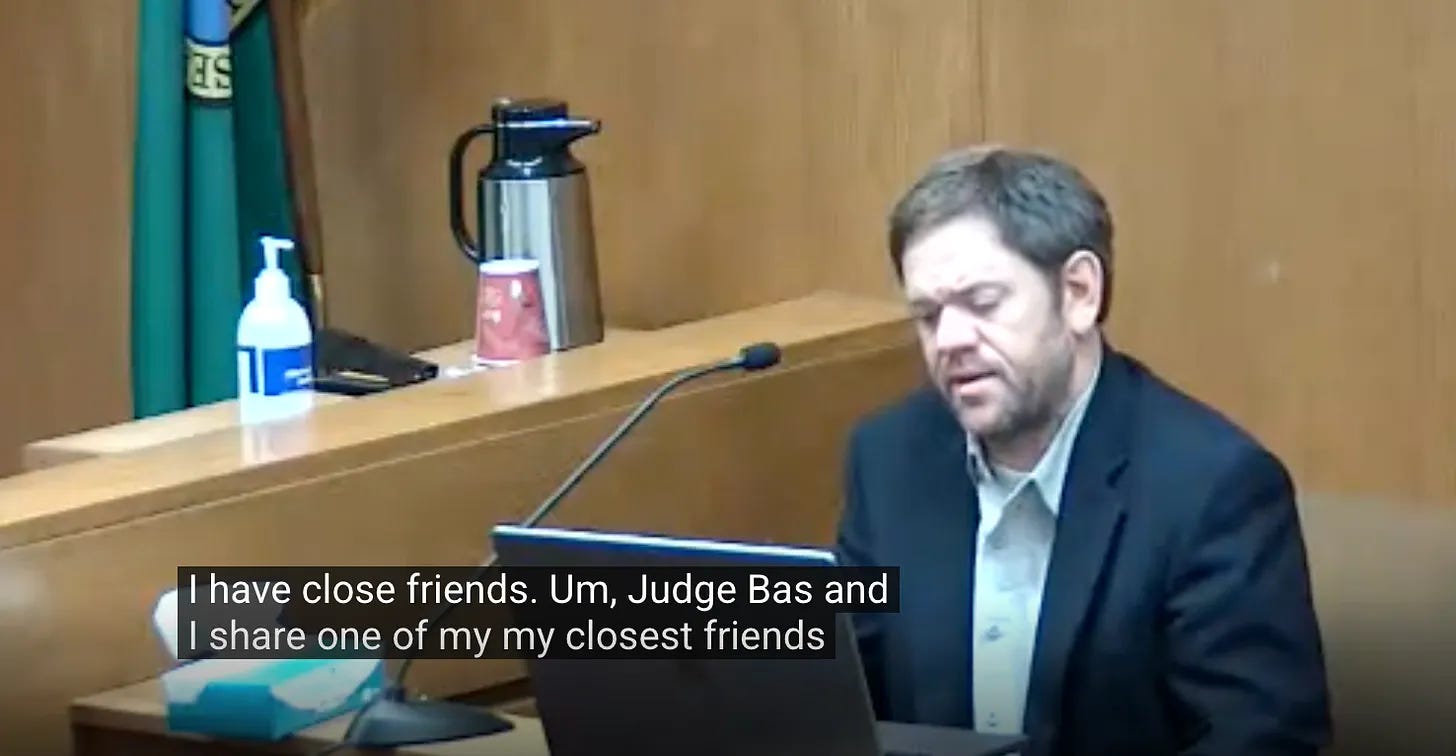
Elder Mavy also requested that the Olympic Herald cease publishing his testimony at a December 2025 trial, where he stated that he shares one of his closest friends with Judge Basden.
Most recently, he has taken issue with the below screenshot of his testimony, which took place in a public court room, and was then provided to us by the court through a court records request.
This aggressive effort to legally gag a newspaper and force the removal of already published reporting is an unconstitutional prior restraint, masquerading as a civil anti-harassment proceeding.
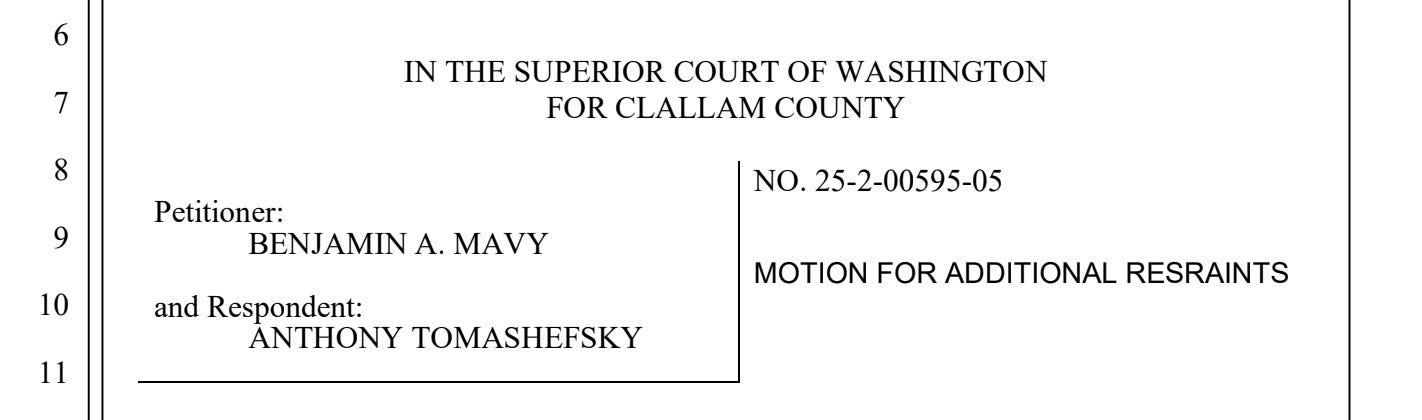
But for Elder Mavy, the tactic of using local authority to suppress critical journalism is not without historical precedent.
In fact, it chillingly mirrors one of the most infamous attacks on the free press in American history: Joseph Smith’s (the founder of the LDS) destruction of the Nauvoo Expositor.
A Press Destroyed
To understand the gravity of the Nauvoo incident, one must understand the authoritarian nature of the man who ordered it. Joseph Smith was not just a local politician, he was a self-appointed theocratic dictator who demanded absolute, unquestioning obedience.
By 1844, he had gathered tens of thousands of followers to Nauvoo, Illinois. Smith held a dangerous, unconstitutional concentration of power: serving simultaneously as the LDS Church’s Prophet, the city’s Mayor, and the Lieutenant General of a private militia.
Behind closed doors, Smith had even formed a secret shadow government known as the “Council of Fifty,” aiming to establish a global theocracy with himself as king, all while actively running a covert political campaign for President of the United States.
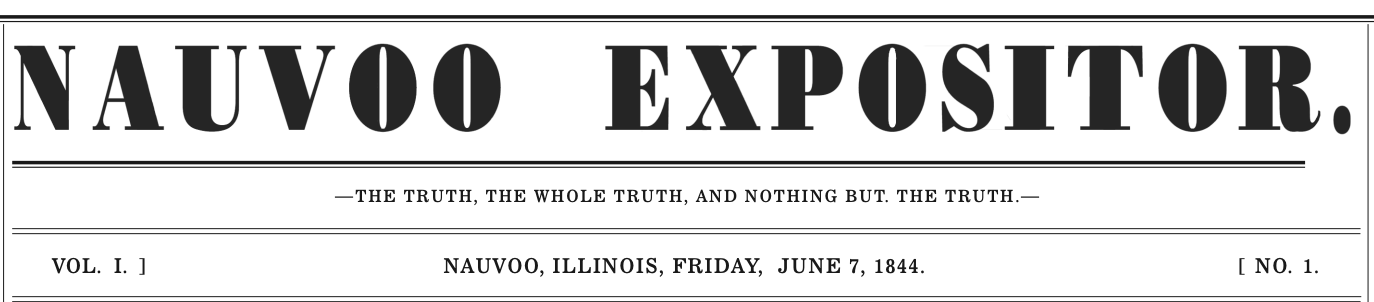
On June 7, 1844, a group of dissenters—former LDS insiders who had grown terrified of Smith’s dictatorial control—published the first and only issue of the Nauvoo Expositor.
The newspaper laid bare the truth. It publicly exposed Smith’s secret practice of polygamy and explicitly warned the public of his corrupt, power-hungry mingling of church and state, directly threatening his national political ambitions.
The response from the Nauvoo leadership was swift, ruthless, and entirely illegal. Rather than answering the paper’s allegations with speech of his own, Smith operated like a tyrant crushing a rebellion.
On June 10, 1844, Smith weaponized the Nauvoo City Council to officially declare the newspaper a “public nuisance.” Under the guise of protecting the peace, Mayor Smith ordered the town marshal and a heavily armed posse of roughly 100 men to march on the paper, smash the printing press with sledgehammers, scatter the type in the streets, and burn the remaining copies.
When neighboring towns erupted in outrage over this flagrant violation of the First Amendment, Smith didn’t apologize—he doubled down.
Smith declared martial law in Nauvoo and mobilized his private army to prevent anyone from holding him accountable. This tyrannical suppression of the press was the breaking point that led directly to Smith’s arrest for treason and his subsequent assassination by an angry mob just weeks later.
Despite this documented legacy of tyranny, modern efforts by LDS apologists are actively attempting to rewrite history. In a staggering display of historical revisionism, a growing 2026 LDS-led public relations push—eagerly promoted by the official LDS Church Newsroom—has actually attempted to brand Joseph Smith as “Lincoln before Lincoln.”
This outrageous claim stems from a February 2026 portrait unveiling at Morehouse College, where the LDS church celebrated quotes praising Smith’s 1844 presidential campaign pamphlet as an abolitionist milestone. Yet, this PR spin conveniently ignores Smith’s own preserved documents from 1836 where he explicitly justified slavery.
In an April 1836 letter published in the Latter Day Saints’ Messenger and Advocate, Smith vehemently attacked the abolitionist movement, arguing that freeing enslaved people would “lay waste the fair States of the South” and “set loose, upon the world a community of people who might, peradventure, overrun our country.”
In a stark defense, Smith justified slavery, declaring it a “lasting monument of the decree of Jehovah” and citing the biblical curse of Canaan that “a servant of servants shall he be unto his brethren.”
To compare Abraham Lincoln—the president who emancipated the enslaved—to a theocratic dictator who declared martial law, crowned himself king of a shadow government, and ordered a private army to illegally smash a printing press with sledgehammers to hide his secret polygamy, is insulting and dangerous.
Lincoln upheld the Constitution, while Smith used his power to trample the First Amendment. It proves that the institutional instinct to suppress the truth and sanitize authoritarians is just as strong today as it was in 1844.
This violent hostility toward free speech became a hallmark of the LDS church. Smith’s successor, Brigham Young, ruled the Utah territory with an iron fist, utilizing a climate of terror and intimidation to ruthlessly crush dissenting voices.
When The Valley Tan—Utah’s first non-Mormon newspaper—began publishing in 1858 under editor Kirk Anderson to serve the territory’s minority populations and federal soldiers at Camp Floyd, it dared to expose the dark underbelly of Young’s theocracy.
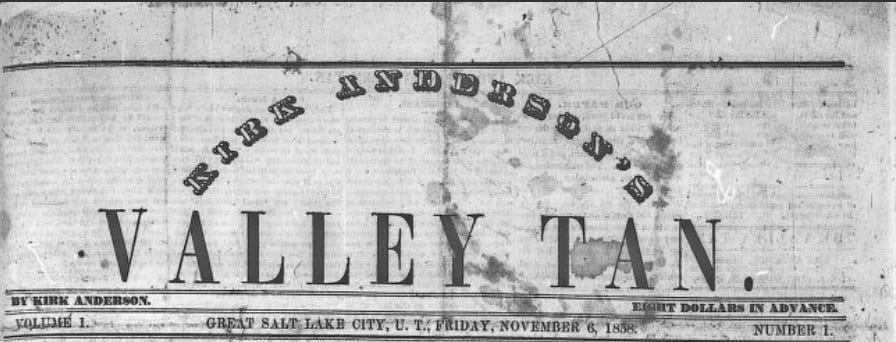
The paper reported on armed LDS police harassing non-Mormons and secretive church councils.
But its ultimate sin was investigating the horrific Mountain Meadows Massacre—a mass murder of 120 innocent men, women, and children by the local LDS militia. The cruelty extended far beyond the initial slaughter, revealing a chilling willingness to erase the identities of the vulnerable to protect the perpetrators.
Seventeen children were taken from the bloody arms of their murdered parents. Instead of turning them over to federal authorities, LDS leadership distributed the traumatized orphans to local LDS families as spoils of war.
In response to the reporting, Brigham Young violently denounced the publication as a “miserable little sheet,” and through orchestrated mob intimidation, The Valley Tan was forced out of existence.
A decade later, when a group of reform-minded Mormons known as the Godbeites grew disgusted with Young’s absolute dictatorial control and founded the publication that would become the Salt Lake Tribune, Young’s retaliation was merciless.
Young didn’t just excommunicate the founders, but also unleashed a coordinated, ruthless campaign of economic strangulation and social ostracization specifically designed to destroy their livelihoods for daring to challenge his authority.
The Modern Echo
Today in Clallam County, we are no longer smashing printing presses with sledgehammers or declaring martial law to hide from accountability, but the fundamental tactic remains exactly the same: exploiting local systems of power to silence inconvenient truths.
Instead of a city council declaring a newspaper a “public nuisance,” Elder Mavy is attempting to leverage the civil protection order system, arguing that Olympic Herald articles mentioning Judge Basden constitute “stalking” and “harassment.”
The goal is identical to the one in Nauvoo in 1844: to sidestep the First Amendment, shut down protected speech, and punish those who bring uncomfortable truths to light.
The United States Supreme Court has repeatedly and emphatically struck down this exact brand of legal maneuvering. In the landmark case Near v. Minnesota, 283 U.S. 697, 715 (1931), the Court ruled that utilizing local statutes to enjoin or gag a newspaper is the very essence of unconstitutional prior restraint.
In Near, local officials tried to shut down a newspaper by legally declaring it a “malicious, scandalous and defamatory” public nuisance. Striking down the statute, Chief Justice Charles Evans Hughes explicitly protected the press’s right to scrutinize public officials, writing: “[T]he fact that the liberty of the press may be abused by miscreant purveyors of scandal does not make any the less necessary the immunity of the press from previous restraint in dealing with official misconduct.” The Court noted that finding a remedy for local corruption relies heavily “upon the free press.”
Furthermore, the Supreme Court has explicitly rejected the tactic of using “harassment” or “invasion of privacy” claims to secure an injunction against protected speech.
In Organization for a Better Austin v. Keefe, 402 U.S. 415 (1971), the Court struck down a lower court’s injunction that attempted to stop the distribution of pamphlets critical of a local businessman. Chief Justice Warren Burger established a formidable barrier for those seeking to silence speech through civil orders: “Any prior restraint on expression comes to this Court with a ‘heavy presumption’ against its constitutional validity.” Id. at 419.
The Court specifically held that a subject’s personal discomfort cannot override the First Amendment, holding that “[d]esignating the conduct as an invasion of privacy, the apparent basis for the injunction here, is not sufficient to support an injunction against peaceful distribution of informational literature…” Id. at 419-20.
Washington state law provides an even stronger shield against these authoritarian maneuvers. Article I, Section 5 of the Washington State Constitution declares that “[e]very person may freely speak, write and publish on all subjects, being responsible for the abuse of that right.”
Our state’s highest court has repeatedly held that this provision offers greater, more robust protection against prior restraint than the federal First Amendment.
In the landmark case In re Marriage of Suggs, 152 Wash.2d 74 (2004), the Washington Supreme Court directly addressed the exact tactic Mavy is employing. The Court explicitly struck down an attempt to use a civil anti-harassment order to silence a citizen’s protected speech, ruling it an unconstitutional prior restraint.
As the Court noted, temporary restraining orders and permanent injunctions that forbid speech activities “are classic examples of prior restraints.” The Court forcefully concluded that “Article I, section 5 of the Washington Constitution categorically prohibits prior restraints on constitutionally protected speech.” Id. at 84.
Under Washington law, exploiting harassment statutes to legally gag a newspaper is not just an abuse of the court system—it is a flagrant violation of the state’s highest constitutional guarantees.
But Elder Mavy’s lawsuit is symptomatic of a broader culture of suppression cultivated around Judge Basden himself. Much like the authoritarians of the past who viewed any criticism as a threat to their absolute power, the judge at the center of this controversy has his own documented history of utilizing positions of power to intimidate critics and obscure the truth.
Before taking the bench, Basden was a partner at Wolfley, Basden, Hansen, and Black, a law firm that weaponized the judicial system to protect his close friend and partner, Lane Wolfley, a former LDS Bishop.
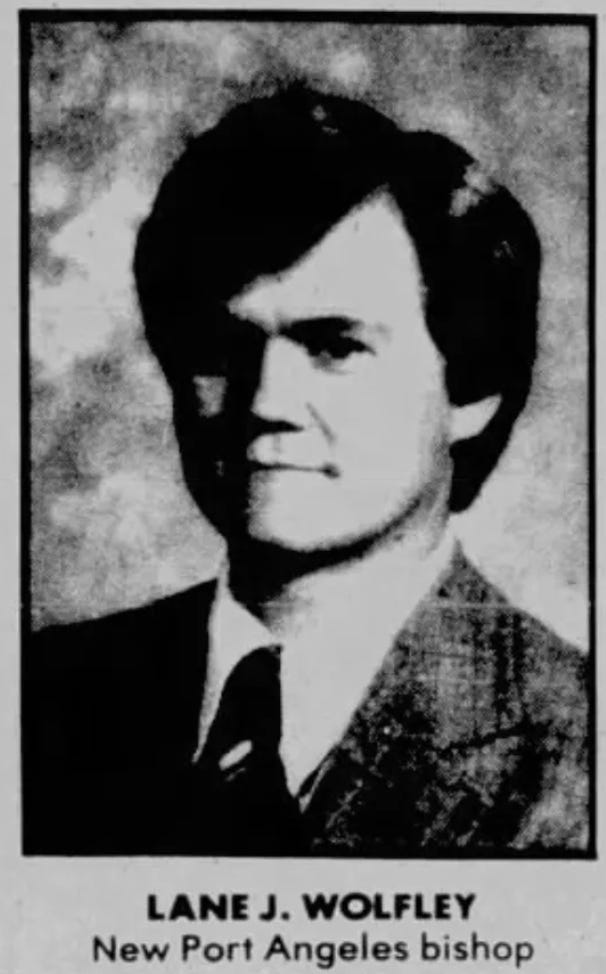
In 2004, the firm filed a lawsuit demanding a woman be financially penalized until she moved out of Washington state, essentially attempting to use the courts to legally banish the victim of Wolfley’s misconduct.
During this same period, the firm also secured a permanent gag order against an unhoused man, stripping him of his First Amendment rights to speak about Wolfley. Basden’s own firm letterhead appeared on the chilling legal documents designed to protect this behavior, and he personally filed motions in the proceedings.
Since taking the bench, Basden’s hostility toward public scrutiny has only become more pronounced. His disdain for the local media has been a matter of public record for years.
During a public forum discussing the role of the media, fellow judges praised the press, with retired Clallam Judge Brooke Taylor stating that it “keeps us all accountable.” Basden, however, used the opportunity to attack the Peninsula Daily News, complaining he was “discouraged” by their front-page reporting and broadly claiming, “I frequently find that everything I read isn’t accurate.”
This defensiveness extends to any form of public oversight. In 2020, he sent an aggressive email to former Clallam County Commissioner Bill Peach, scolding the elected official for publicly questioning the timing of judicial retirements.
Echoing Joseph Smith’s claims that the Expositor disturbed the peace, Basden called the basic public scrutiny “disheartening” and defensively claimed it would have the effect of “undermining the legitimacy of the judiciary.”
More recently, Basden used his platform from the bench to attack the press directly, labeling our investigative reporting into his own potential conflicts of interest as “cyberbullying.”
As a public official, Basden would do well to remember the Court’s ruling in New York Times Co. v. Sullivan, 376 U.S. 254, 270 (1964), where Justice William Brennan articulated the nation’s “profound national commitment to the principle that debate on public issues should be uninhibited, robust, and wide-open, and that it may well include vehement, caustic, and sometimes unpleasantly sharp attacks on government and public officials.”
It is no coincidence that this aggressive legal maneuver by Elder Mavy is happening now. Basden’s hostility to the press is peaking at a moment when he is facing unprecedented pressure from the community.
Earlier this year, citizens launched a public petition demanding Basden’s immediate removal from the bench, explicitly accusing him of making rulings that have “often favored certain parties, contradicting evidence presented in court.” The petition also notes that there have been “multiple appeals against his judgments, suggesting a persistent issue with his judicial conduct.”
The individuals attempting to silence the Herald are the exact figures who most require public oversight. My reporting on Elder Mavy’s alleged wildlife crimes in Wyoming and allegations of child abuse, alongside his connections to Judge Basden, is fully protected speech.
Furthermore, the Herald’s coverage of the Superior Court’s abrupt termination of Family Court Commissioner Brian Parker on February 10, 2026, after just 13 months on the bench, is exactly the kind of investigative journalism that holds an opaque local judiciary accountable.
Parker was fired in a closed process without oversight, supervision or input from voters by the Superior Court judges—a group that includes Basden.
My late grandfather, Tom Hennessy, didn’t just understand the importance of a free press—he fought for it on the front lines against judicial censorship. Before his award-winning thirty-year tenure at the Long Beach Press-Telegram, he founded an alternative weekly newspaper called the Pittsburgh Forum.
In February 1972, the Forum was preparing to publish the “Litchfield Papers,” an explosive report linking the powerful Mellon family’s business interests to the financial deterioration of the University of Pittsburgh.
The night before the issue was due to print, an Allegheny County judge issued a temporary restraining order, legally gagging the paper and stopping the presses. It was a blatant act of prior restraint designed to protect the local establishment.
But my grandfather refused to be intimidated by the courts. He fiercely fought the unconstitutional injunction, stood his ground, and ensured the truth saw the light of day.
He understood that the fundamental duty of a free press is to shine a light into the dark corners of powerful institutions. When local leaders view accountability as “bullying” and treat the First Amendment as a “nuisance” to be bypassed, the independent press is always the first target.
Demanding the forced removal of these articles and a ban on future reporting under the threat of a $2,000-a-day fine is a chilling escalation. It is a modern-day burning of the press.
The Streisand Effect
When powerful figures attempt to crush the press, they often inadvertently amplify the very truth they are desperate to conceal. Historically, this is known as the Streisand Effect, and it proves that the tactic of legal suppression is not just unconstitutional—it is fundamentally ineffective.
Joseph Smith’s destruction of the Nauvoo Expositor didn’t hide his secret practices, it broadcast them to the entire nation and led to his downfall. In the modern era, the internet ensures that local efforts to silence journalists only draw a much larger, national spotlight.
Elder Mavy’s aggressive legal maneuver against the Olympic Herald is already having the opposite effect. The underlying issues that these civil orders are attempting to suppress—specifically the CJC investigation into allegations of dangerous religious bias surrounding Judge Basden—are no longer confined to Clallam County. They have now caught the attention of national media.
Recently, the popular Cults to Consciousness podcast, which reaches an audience of nearly 400,000 subscribers, featured a dedicated investigation into Judge Basden’s conduct. Joined by a legal expert, the show broke down the formal disciplinary complaint filed against Basden in February 2026.
The podcast highlighted the exact systemic issues we’ve been reporting on: a local justice system where personal and ecclesiastical networks appear to eclipse the law, leaving vulnerable children and the public at risk.
By trying to gag the Herald and force the removal of over thirty articles, these figures are not making the story disappear. Instead, they are signaling to the rest of the country that there is something deeply wrong in Clallam County’s Superior Court.
The Fight Ahead
Fortunately, I will not be facing this fight alone. On April 16th, I will be represented by attorney Rasham Nassar, a talented and uncompromising defender of justice in Washington state. Beyond her stellar reputation in the courtroom, Nassar is no stranger to battling entrenched local power. As a former City Council Member and Mayor of Bainbridge Island, she built a legacy of holding the establishment accountable.
(Update June 1, 2026): The Olympic Herald defeated the legal attack.
Great information on some of the history of the LDS church. Sounds very much like the cult of Scientology.
Clallam County has always been about the good old boy network whether a judge, politician or county/city employee getting the promotion or the family member getting the job. If you’re not in the club, too bad for you. Our county leaders have had minimal accountability for decades and it’s past time that they do. I hope for great success for you on the hearing.
This is an amazing work. I hope that justice prevails. (Not Clown County justice, mind you, real justice.) Basden should be removed from his bench, and replaced. All of his decisions should be scrutinized, especially those involving his "friends".