
Junk Science, Twisted Ethics, and the Washington Custody Crisis

Family courts represent a unique consolidation of power where one person is judge, jury and executioner. The judge is provided with broad judicial discretion and stands powerfully protected from scrutiny if they fail to apply standard principles of justice or constitutional rights of due process.
Although child sexual abuse is fundamentally a matter for the criminal justice system, family courts often become the de facto arbiters of such claims.
Problematically, criminal investigations are often replaced by assessments from parenting evaluators and guardians ad litem. These professionals often lack the qualifications necessary to investigate sexual abuse or domestic violence.
Children Prevented From Speaking About Abuse
In Washington, children are rarely allowed to testify in family court proceedings, even if they allege a parent is sexually abusing them. Children rely on these professionals to act in their best interest and speak for them. The court effectively decides the child’s fate without ever hearing from the child victim.
This process is further undermined by a blatant conflict of interest: the accused perpetrator is often the one paying the professional for their services.
One Professional Performed Hundreds of Evaluations Despite Suspension
Stuart Greenberg was a clinical affiliate at the University of Washington, a former consultant to the Seattle Archdiocese and a past president of the American Board of Forensic Psychology.
In the 1990s, Greenberg had been charged by the state examining Board of Psychology for misconduct in several custody evaluation cases. He pled guilty and was suspended from doing custody evaluations for three years.
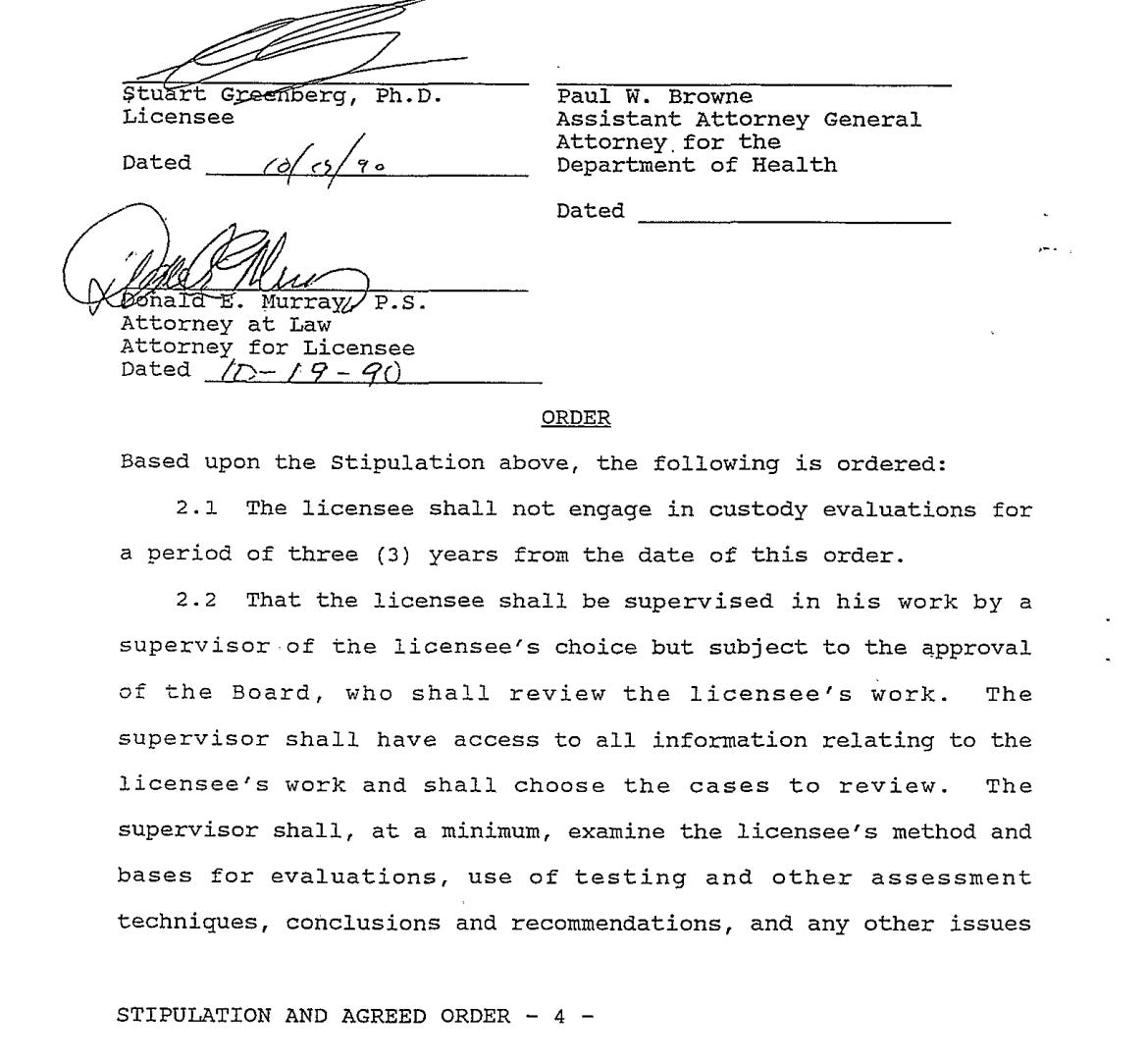
However, there was an error in the official papers regarding the matter. Greenberg used the error as a legal basis to go to court in King County, and ask that the state be barred from releasing any records about his suspension.
King County Judge R. Joseph Wesley refused to go along.
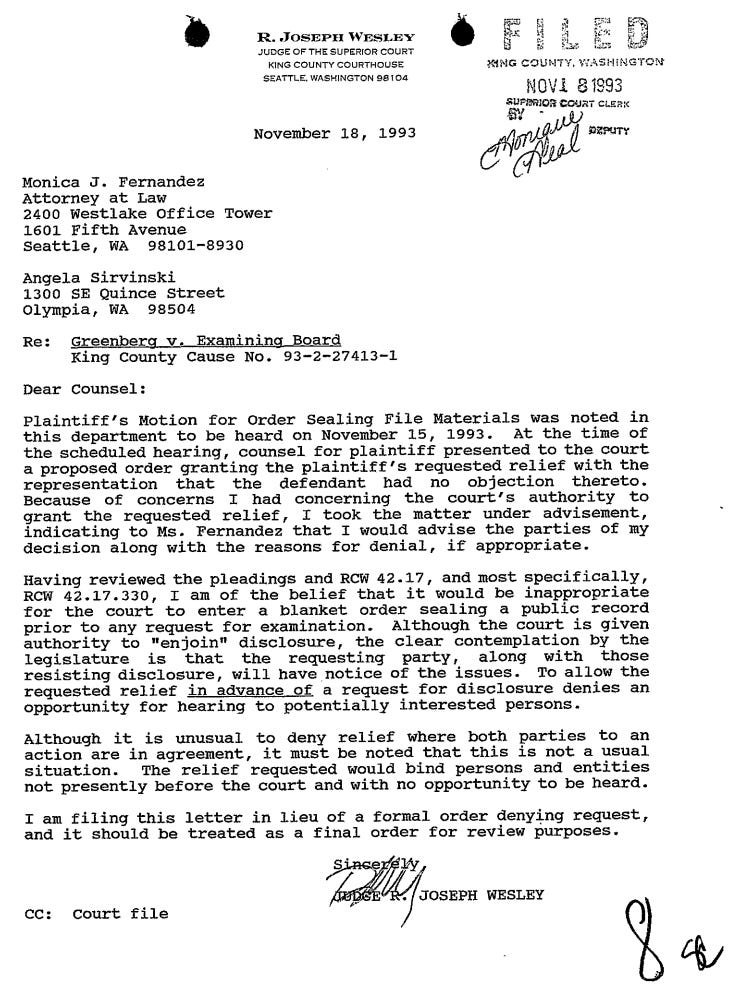
But one year later, Greenberg went down to Thurston County, and Judge Daniel Berschauer agreed to place the state’s records off-limits to the public. Judge Bershauer also sealed the entire court file describing Greenberg’s secrecy request.
Greenberg then moved to King county, where the Thurston County records were not available for anyone to see. There he was able to conduct hundreds of other custody evaluations, to the detriment of children.
In 2007, Greenberg was arrested by the Seattle Police Department for putting a video camera in his office restroom and recording people in various states of undress. He committed suicide in a Renton hotel shortly after his arrest.
King County prosecutors had not filed charges against Greenberg at the time of his death, though Washington state regulators revoked his license one week prior.
Prior to his death, Greenberg managed to build a reputation as one of the nation’s premiere forensic psychologists. King County courts often relied on his expert testimony.
He was well respected by his King County peers. Dr. Marsha Hedrick, who has testified in hundreds of Washington court proceedings and appears on several county registries used by courts to appoint guardians ad litem, said of Greenberg:
“Stu was an incredibly intelligent man and a stellar contributor to the field of forensic psychology.”
Greenberg’s testimony often determined the outcome for children.
In one case, Greenberg had recommended joint custody despite the father’s prior conviction of brutally beating the mother. Greenberg branded the mother as emotionally unstable, saying she complained too much of the abuse she had suffered.
In that case and many others, Greenberg justified his recommendations by referencing Parental Alienation Syndrome, a widely discredited concept in the field of psychology.
Yet Greenberg’s strategy is often still effective in Washington courts.
According to research by Professor Joan S. Meier and colleagues, when fathers cross-claim alienation in response to abuse allegations, they have almost three times the odds of taking custody from mothers alleging abuse, than when they do not crossclaim alienation.
Mothers’ custody losses are predicted to increase from 32% to 52% when they are alleging child abuse and the father responds with an alienation claim.
Why Are Courts Falling For It?
In the 1980s to early 2000s, New York courts would often defer to child psychiatrist Richard Gardner. He testified in several hundreds of cases, frequently on behalf of fathers accused of child molestation.
Gardner convinced judges that he was a paid and tenured professor at Columbia University’s College of Physicians and Surgeons. In reality, Gardner was neither paid, tenured, nor a full professor at Columbia, he was an unpaid volunteer.
When it came to his research papers, Gardner insulated his work from peer scrutiny. He self-published, used his own publishing company, and republished his self published materials.
Gardner created the concept of “Parental Alienation Syndrome” in 1985. The concept was created as a counter strategy for fathers accused of sexual abuse.
Many of Gardner’s views, which assisted his creation of parental alienation syndrome, are disturbing.
For instance, in his work, Gardner wrote, “there is a certain amount of pedophilia in all of us,” and he wrote that in cases of child molestation, the mother “should be helped to understand” that her child possibly “enjoyed immensely the sexual activities.”
New York Courts Eventually Caught On
In the 1990s, Michael Fortin was indicted in Nassau County and charged with Sodomy in the First Degree, Sodomy in the Second Degree, Attempted Rape in the First Degree, Attempted Rape in the Second Degree, Endangering the Welfare of a Child, and Sexual Abuse in the First Degree.
The charges arose out of an alleged incident between Fortin and a 13-year-old girl who was Fortin’s wife’s niece.
Fortin attempted to introduce testimony from Richard Gardner as part of his case, specifically regarding Parental Alienation Syndrome. An evidentiary hearing was requested by the District Attorney and consented to by Fortin.
The hearing gave Fortin an opportunity to establish admissibility of Gardner’s concept, by offering evidence of general scientific acceptance.
At the hearing, Fortin’s counsel called Gardner to describe Parental Alienation Syndrome. The court was not convinced, and it wrote in its order:
“Based upon the testimony at the hearing, this Court finds that the defendant has not established general acceptance of Parental Alienation Syndrome within the professional community which would provide a foundation for its admission at trial.” See People v. Fortin, 184 Misc. 2d 10, 706 N.Y.S.2d 611 (N.Y. Dist. Ct. 2000)
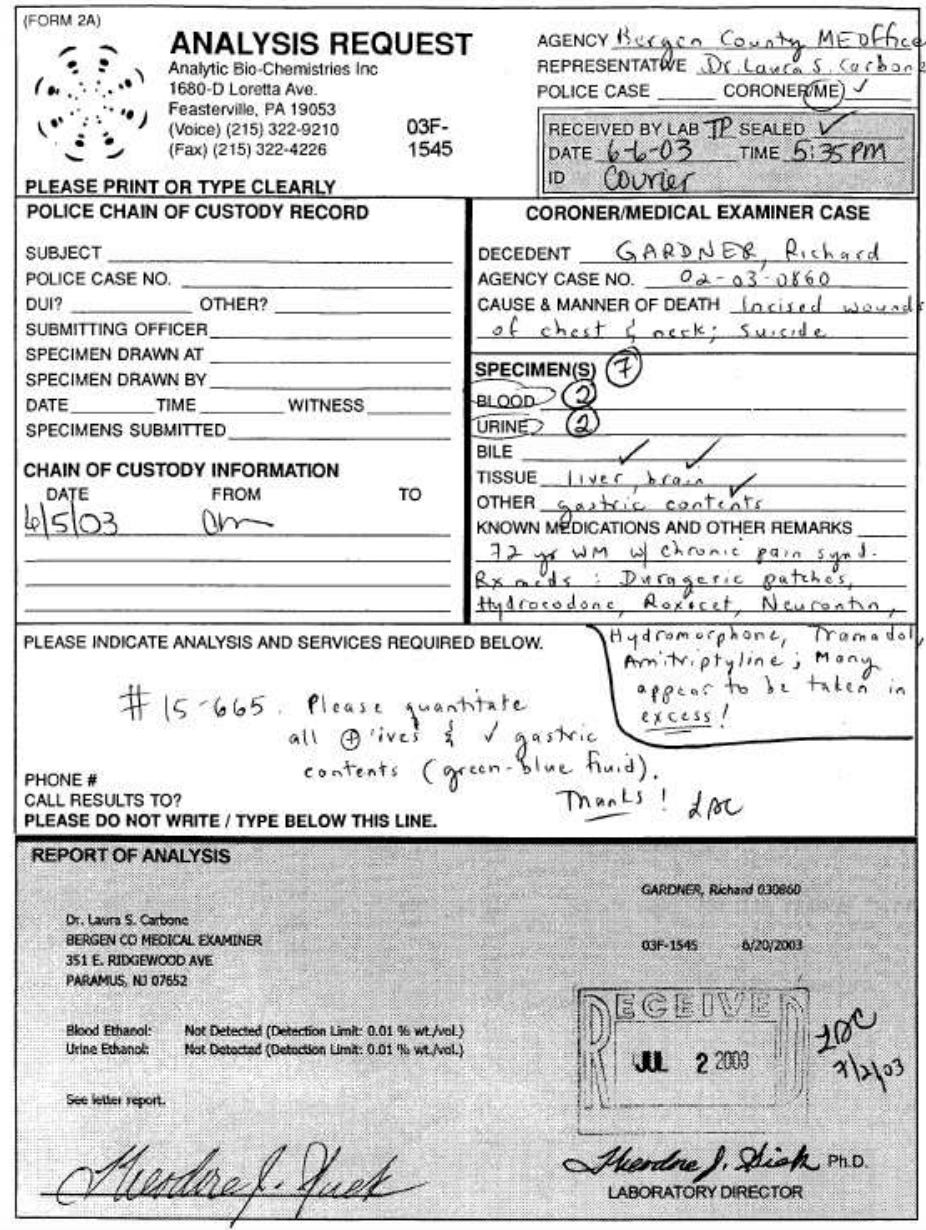
On May 25, 2003, Gardner took his own life by stabbing himself at his home in Tenafly, New Jersey.
Often Referenced in Washington Courts
Yet, in Washington, fathers facing sexual abuse allegations are still countering those claims by citing Gardner’s Parental Alienation Syndrome.
Professionals, such as Dr. Marsha Hedrick continue to endorse and testify as an expert on Gardner’s discredited concept.
Our readers are also familiar with former Clallam County Court Commissioner Brian Parker. Prior to his appointment in Clallam County, Parker served as a guardian ad litem within the Clark, Snohomish, and Skagit County court systems.

During a trial in May 2022 in Snohomish County Superior Court, Parker accused a mother involved in the case of parental alienation. Parker testified, “I saw certain behaviors that my readings indicate were consistent with, perhaps, a personality disorder.”
Yet Parker had no relevant training or ability to diagnose people. He testified, “I do want to stress, I have no training in psychology. I don’t diagnose people…”
But in July 2022, Snohomish County Superior Court Judge Paul Thompson ruled that as a result of Parker’s testimony, the mother would lose custody of the kids.
Parker’s testimony in this case later led to his arrest by the Everett Police Department.
Not Generally Scientifically Accepted
Although still prevalent in Washington courts, Parental Alienation Syndrome has failed to gain acceptance from the world’s leading medical and psychological institutions.
Despite having been introduced over 50 years ago, there remains no credible scientific evidence supporting parental alienation syndrome. It is not listed as a diagnosis in the Diagnostic and Statistical Manual of Mental Disorders. Nor has the concept gained general acceptance in the scientific field. There remains no test, no data, or any experiment to support claims made concerning parental alienation.
It has also been dismissed by the American Psychiatric Association, American Psychological Association, and American Medical Association as lacking supporting empirical or clinical evidence.
Dr. Paul J. Fink, a past president of the APA, has stated quite bluntly, ‘‘parental alienation syndrome as a scientific theory has been excoriated by legitimate researchers across the nation.”
Yet the divergence between scientific reality and Washington courtroom practice is stark. While the legitimate mental health community has largely discarded Richard Gardner’s theories as “junk science” founded on misogyny and pedophilia, Washington family courts continue to embrace them.
As long as judges and court-appointed professionals like Brian Parker are permitted to prioritize discredited theories over the safety of children, the Washington family court system will remain a venue where protective parents are punished, and children are handed over to the very people they fear most.
Yesss!! Thurston County has quite literally destroyed & disabled my family!! Thank You! Thank you so much!! #PunishedForProtecting #StateSanctionedTorturedPOW
Wow. Incredible research. I had no idea of the history of alienation, but its quite clear its designed to enable abusive behavior by fathers. It's illegitimate and deserves to be put to rest.