
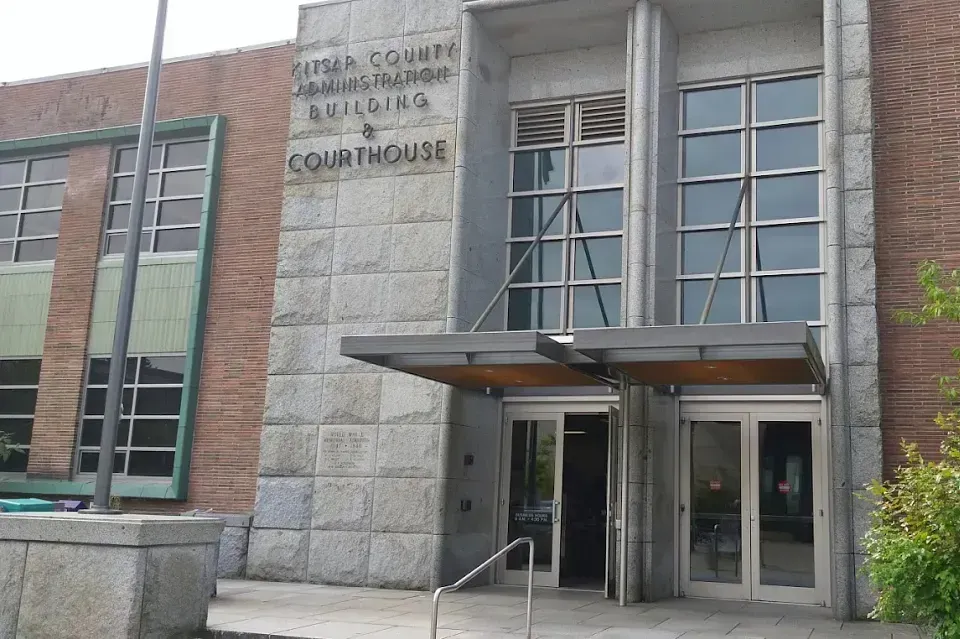
A Washington State appellate court has thrown out a man's Kitsap County conviction for violating a domestic violence no-contact order, ruling that the State failed to prove a friend's phone call to the man's ex-wife amounted to contact "through a third party."
In an unpublished opinion filed today, July 14, 2026, Division Two of the Washington State Court of Appeals reversed Curry Mitchell Vancura's conviction on one count of violating a court order and remanded the case to Kitsap County Superior Court for resentencing.
The three-judge panel found that the record contained no evidence that the friend, who called Vancura's ex-wife to locate a truck he had just purchased from Vancura, was acting as Vancura's messenger rather than pursuing his own interests as a buyer.
The Background: An Arrest in the Driveway
According to court records, Vancura and his ex-wife, Crystal Vancura, were married for seven years and share a daughter with significant special medical needs.
Their relationship after the divorce was strained. Crystal testified that Vancura frequently called and messaged her at inappropriate times, and she posted a “No Trespassing” sign in her yard to make clear he was not welcome to show up unannounced.
On May 2, 2024, after calling Crystal at 6:00 a.m. demanding to speak to and see their daughter that day, Vancura appeared at her home that evening.
When told to leave, he initially watched from across the street, then parked his car blocking her driveway and began walking between his car and the house, yelling at her. Crystal called 911.
Responding officers found an AR-15 on the backseat of Vancura’s truck and a long knife in the center console. He was arrested and taken to the Kitsap County Jail, and his truck was eventually towed from the driveway.
Following the arrest, Kitsap County Superior Court entered a pretrial domestic violence no-contact order.
The order barred Vancura from having any contact whatsoever with Crystal, "in person or through others by phone, mail, or any means, directly or indirectly," with narrow exceptions for service of court documents and contact by his lawyers.
The Truck Sale
While in jail awaiting trial, Vancura sold his truck to a friend, Charles Barnett, on recorded jail phone lines.
In a May 14, 2024 call, Vancura offered Barnett "a hell of a deal" on the truck for $1,000, explaining that it had probably been towed and had a broken shift slider he would fix.
He told Barnett that his lawyer was going to find out where the truck was because he was not allowed to contact his ex-wife, but that if he gave Barnett her number, Barnett "could call and say that you bought the truck from me and you need to know where it is so you can go get it."
The next day, Vancura gave Barnett Crystal's phone number and instructed him to tell her he had bought the truck and needed to find out where it was. Barnett agreed and called Crystal later that day. She reported the call to police.
The State charged Vancura with seven counts, including stalking with a weapon, harassment, second degree criminal trespass, attempted residential burglary, and two counts of violating a court order, each of those designated as a domestic violence offense.
He was also charged with driving without an ignition interlock device when one was required. The second court order violation, Count VI, was based on Barnett's call to Crystal about the truck.
A Kitsap County jury acquitted Vancura of stalking, harassment, and attempted residential burglary. It found him guilty of second degree criminal trespass and both counts of violating a court order. Vancura had pleaded guilty to the ignition interlock charge before trial.
The Appeal
On appeal, Vancura challenged only Count VI, arguing that the State presented insufficient evidence that he knowingly contacted or attempted to contact Crystal through Barnett.
Barnett never testified at trial. Vancura objected on hearsay grounds to any discussion of the content of Barnett's call to Crystal, and the trial court sustained the objection.
As a result, the jury heard almost nothing about what Barnett actually said to her. The recorded jail calls between Vancura and Barnett were played for the jury.
Writing for the panel, Judge Rebecca Glasgow acknowledged that Vancura acted deliberately when he gave Barnett the phone number and told him to call, and that he clearly knew about the no-contact order, having referenced it in the recorded call.
But the court drew a distinction between facilitating a third party's own contact and directing contact through a third party. The only evidence about the call showed Barnett reached out for his own purposes: finding the truck he had just agreed to buy.
The no-contact order prohibited Vancura from contacting Crystal through others, the court explained, but it did not prohibit a third party from contacting her for their own reasons, such as locating a truck they had purchased.
"There is no evidence that Barnett's phone call to Crystal amounted to contact by Vancura through a third party," Glasgow wrote, noting the record was silent as to what Barnett said and nothing suggested he conveyed that he was calling on Vancura's behalf.
The Outcome
The panel reversed the Count VI conviction and remanded the case for resentencing. Vancura's remaining convictions, including the other count of violating a court order, were not challenged in the appeal.
Judges Anne Cruser and Erik Price concurred in the opinion.
Vancura was represented on appeal by Moses Ouma Okeyo of the Washington Appellate Project in Seattle.
The State was represented by Randall Avery Sutton of the Kitsap County Prosecuting Attorney's Office in Port Orchard.
The underlying trial took place before Kitsap County Superior Court Judge Jennifer A. Forbes.
Because the opinion is unpublished, it has no precedential value and may not be cited as binding authority under Washington court rules, though it becomes part of the public record.
↺ Republish this story
Our stories are free to republish, online or in print, under these rules:
- Credit The Olympic Herald and the author, and link back to this story.
- Don't edit the story except for style, length, or to update time references.
- If you republish online, use our canonical URL so search engines credit the original.
- Don't sell the story or use it primarily to sell advertising.
Questions? Contact us.