
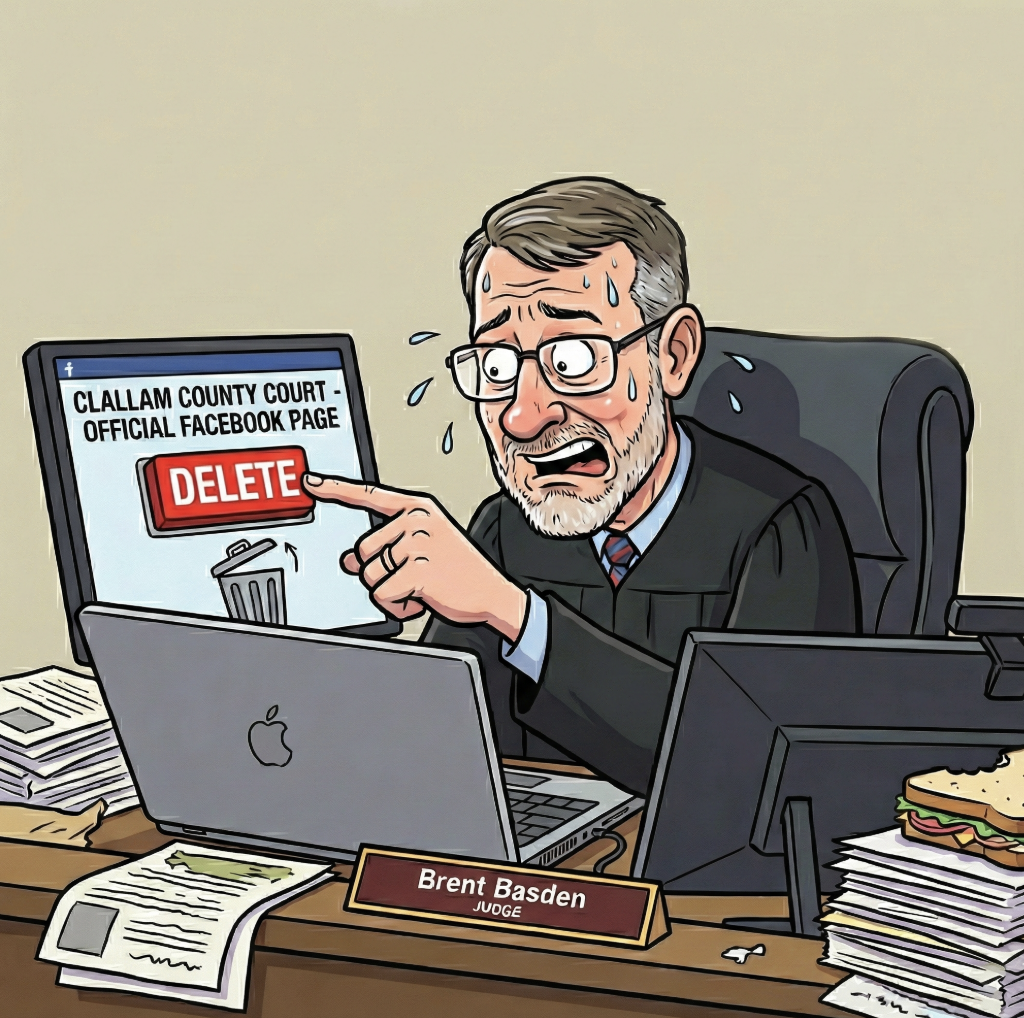
The Clallam County Superior Court’s official Facebook page remains completely dark as of this morning, almost two weeks after it abruptly vanished from the internet.
Newly obtained internal emails reveal that the sudden disappearance followed a frantic, behind-the-scenes scramble by court officials to disable public commentary and delete specific photos after constituents began exercising their First Amendment rights.
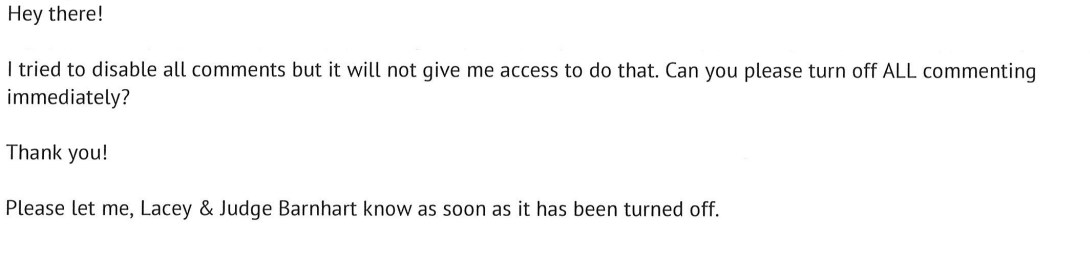
On the morning of Friday, February 13, shortly after the court ceased its practice of filtering comments, an urgent message was sent to the Clallam County IT Department. “I tried to disable all comments but it will not give me access to do that,” wrote Deputy Court Administrator Kaysey Clayton. “Can you please turn off ALL commenting immediately?”
Clayton also requested that she, Court Administrator Lacey Halberg, and Presiding Judge Simon Barnhart be notified the moment the shutdown was complete.
IT Systems Analyst Dean Anderson informed court officials that there was no reliable way to globally shut off public commenting across the Facebook Page. Anderson suggested that the court instead actively moderate by deleting inappropriate comments, banning repeat offenders, and utilizing automatic filters.
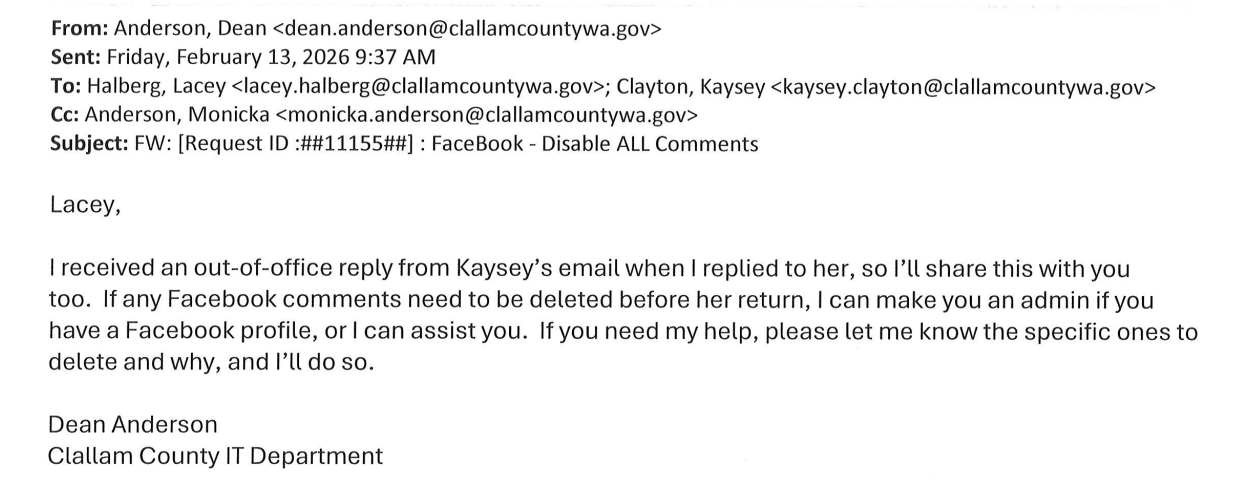
Unable to implement a blanket gag order on the page, the court’s attention turned to removing specific content. Halberg contacted IT with a request regarding “some pictures that are on our FB page.” Anderson identified the photos in question as being part of a post from January 9, 2025, titled, “Commissioner Elizabeth Stanley sworn in as Judge today [1/9/25].”
Because individual photos could not be isolated and removed from a multi-photo post, Anderson advised that the only solution was to delete the entire post, which would inherently wipe out all associated public comments.
During the email exchange, IT staff also circulated an excerpt from Clallam County Policy 420, Section 9.4, which dictates social media use. The policy states that the county “reserves the right to limit or remove posted content at any time without notice” and strictly prohibits “vulgar, offensive, threatening, harassing, anonymous, or profane content.”
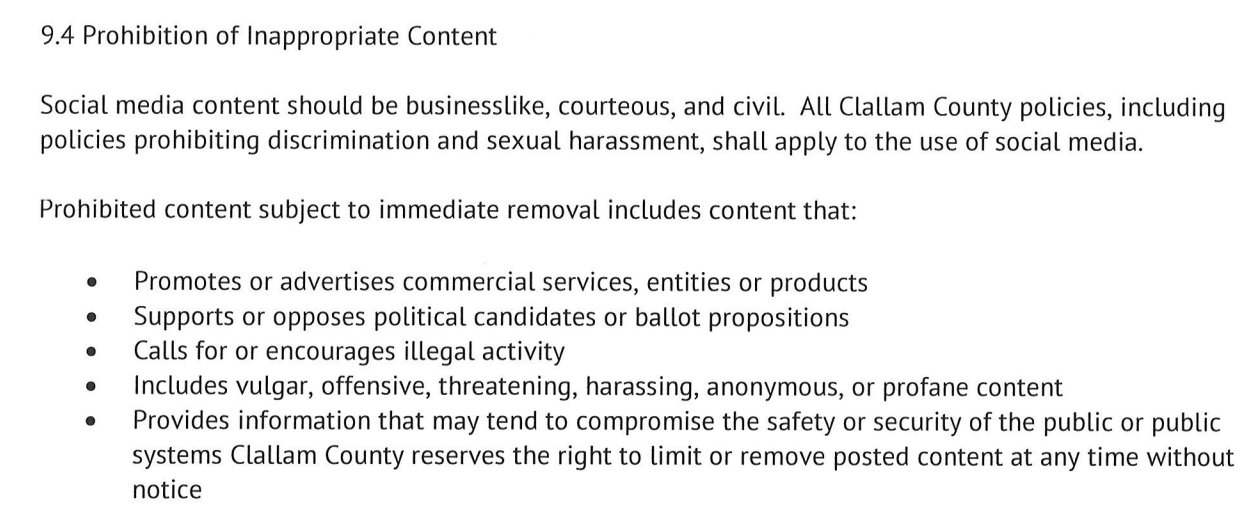
However, such a policy is seemingly unconstitutionally overbroad on its face. By outlawing “offensive” or “profane” speech, the county policy effectively outlaws the heated political and personal commentary that routinely occurs—and is constitutionally protected—when citizens discuss government matters that outrage them.
Rather than navigate the requirements of the First Amendment or endure public criticism regarding court officials like former Court Commissioner Brian Parker, the court ultimately chose the nuclear option.
As of today, the public forum has been entirely destroyed, leaving citizens in the dark.
Republish this story
Our stories are free to republish, online or in print, under these rules:
- Credit The Olympic Herald and the author, and link back to this story.
- Don't edit the story except for style, length, or to update time references.
- If you republish online, use our canonical URL so search engines credit the original.
- Don't sell the story or use it primarily to sell advertising.
Questions? Contact us.