
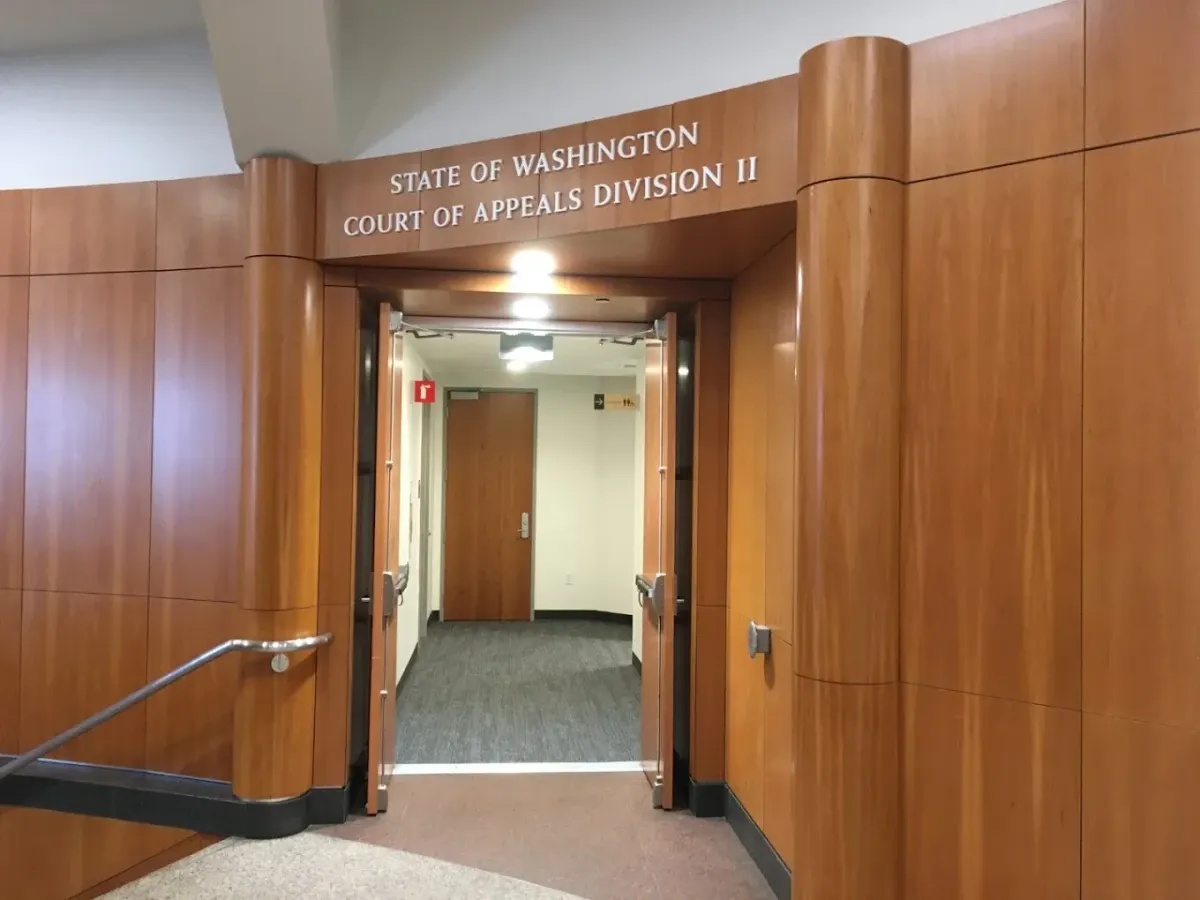
The Washington Court of Appeals upheld a Clark County man's child rape and molestation convictions October 20 despite finding that a prosecutor repeatedly made improper appeals to jurors' emotions and attributed feelings to the girl that she had not described in her testimony.
The Division II panel concluded that the remarks either could have been addressed through jury instructions or were not sufficiently prejudicial to require a new trial.
The court cited the strength and consistency of the girl's account and contradictions in testimony supporting the defense.
The ruling leaves Adalberto Lopez Vicente's prison sentence intact but directs the trial court to narrow a condition allowing polygraph examinations during community custody, or supervision after prison.
Judge Rebecca Glasgow wrote the unpublished majority opinion, joined by Judge Meng Li Che.
Acting Chief Judge Erik Price agreed with the outcome and most of the analysis but questioned part of the majority's criticism of the prosecutor's arguments about the girl's motivations.
The testimony and convictions
The girl, identified in the opinion as EC, testified that Lopez Vicente sexually abused her when she was 12 and 13. He was her older sister's boyfriend and had lived with the family in Battle Ground.
According to the opinion, EC disclosed abuse to a close friend before reporting it to medical providers. At trial, she described several incidents, including sexual touching during a swimming outing and assaults at homes in Battle Ground and Longview.
Lopez Vicente testified and denied any sexually inappropriate contact. His partner, who had married him by the time of trial, disputed circumstances surrounding several incidents. His brother also challenged EC's account of an overnight stay at the Longview home.
A February 2022 examination found no physical signs of sexual abuse. The nurse practitioner who performed it testified that the absence of such signs was common and was not significant.
The jury convicted Lopez Vicente of second-degree rape of a child and second-degree child molestation. It also found that he used a position of trust to facilitate both crimes and that both were part of an ongoing pattern of sexual abuse of the same victim.
The trial court imposed a minimum of 110 months and a maximum of life in prison for child rape. A 41-month sentence for molestation runs at the same time.
Appeals to sympathy
Lopez Vicente argued that the prosecutor's repeated remarks, considered together, deprived him of a fair trial.
The majority identified problems beginning with the opening statement, when the prosecutor addressed jurors as though they were a teenage girl deciding whether to report abuse by a family member's partner. The court said that approach invited jurors to put themselves in EC's position before hearing the evidence.
During closing argument, the prosecutor attributed feelings of guilt about coming forward, a desire for vindication and other motivations to EC. S
he had testified that she disclosed the abuse because she wanted it to stop, but she had not described the specific feelings the prosecutor assigned to her, the majority said.
The prosecutor had gone beyond reasonable inferences and “put words in the victim’s mouth,” the court wrote.
The prosecutor also told jurors he felt bad for EC's mother. After a defense objection prompted the trial judge to remind him of his ethical obligations, he told jurors they should feel bad for her, too.
The state acknowledged on appeal that those comments were ill-advised. The majority found they served only to appeal to sympathy and had no bearing on whether Lopez Vicente was guilty.
The court also rejected the prosecutor's extended discussion of unreported child sexual abuse when coupled with an argument that jurors should validate EC's decision to report and testify.
The state argued that her willingness to continue through a difficult process supported her credibility. The majority agreed that was a permissible subject for argument. But combining it with a broader appeal about unreported abuse crossed the line, the court said.
Another improper remark characterized defense counsel's pretrial interview of EC as an interrogation. That description disparaged the lawyer's professional obligation to interview witnesses, the majority concluded.
It rejected a separate challenge to the prosecutor's comments about cross-examination, finding those remarks permissible in context.
Why the convictions stand
Finding misconduct did not end the court's review. Lopez Vicente also had to establish prejudice.
For comments challenged at trial, the question was whether there was a substantial likelihood the misconduct affected the verdict.
For remarks that drew no objection, he faced an additional hurdle: showing misconduct so flagrant and ill-intentioned that a corrective instruction could not have cured its effect.
Defense counsel objected to only two of the challenged comments. The majority concluded that instructions directing jurors to assess the evidence impartially could have addressed the unchallenged remarks.
When the defense objected near the end of rebuttal, the trial judge reminded jurors not to let emotion overcome rational thought.
The court also considered the cumulative effect of the misconduct. It found no substantial likelihood that the repeated improper comments changed the verdict, citing EC's consistent descriptions of the abuse to her friend, medical providers and the jury.
By contrast, the court found her older sister's testimony inconsistent and confusing. The sister disputed circumstances surrounding the allegations but acknowledged making contrary statements to an investigating detective, then said those earlier statements were untrue.
The majority also cited testimony about EC's reluctance to disclose the abuse, changes in her demeanor and physical and mental health symptoms. It acknowledged that the symptoms could have other causes.
Lopez Vicente separately argued that his attorney provided ineffective assistance by failing to object more often. That claim failed because the court found no reasonable probability that additional objections would have produced a different verdict.
Price's concurrence cautioned against judging arguments about a witness's motivations solely from a written transcript. Tone, physical reactions and other courtroom observations can support reasonable inferences that do not appear on the page, he wrote.
He agreed that the prosecutor made a number of improper statements but questioned where the majority drew the line on that issue.
Evidence challenge and supervision conditions
Lopez Vicente also challenged whether the evidence established sexual gratification during the swimming incident, a required element of the molestation charge. EC described brief contact over her shorts and said she initially thought it was accidental. The court explained that touching over clothing requires additional evidence that the contact was for sexual gratification.
That incident mattered because prosecutors offered several acts as possible grounds for the molestation conviction. Although jurors received a unanimity instruction, the verdict did not identify which act they relied on. The appellate court therefore required sufficient evidence for each incident the prosecutor relied on in closing.
Reviewing the evidence in the light most favorable to the prosecution, the court emphasized EC's testimony that Lopez Vicente rubbed her genital area rather than merely touched it, along with her physical demonstration for the jury.
It found sufficient evidence for a rational juror to conclude beyond a reasonable doubt that the contact was for sexual gratification.
The court rejected Lopez Vicente's argument that a supervision condition requiring him to remain within geographic boundaries set in writing by his community corrections officer was unconstitutionally vague.
It concluded that the condition contemplated written notice of the boundaries, protecting against arbitrary enforcement.
It ordered a change to the polygraph condition, however. Lopez Vicente argued that its unrestricted wording could compel speech or incriminating statements.
The state agreed that testing should be expressly limited to monitoring compliance with valid supervision conditions.
The trial court must add that limitation. The appellate court said polygraph testing may monitor compliance with supervision requirements but may not be used to search for evidence of other crimes.
↺ Republish this story
Our stories are free to republish, online or in print, under these rules:
- Credit The Olympic Herald and the author, and link back to this story.
- Don't edit the story except for style, length, or to update time references.
- If you republish online, use our canonical URL so search engines credit the original.
- Don't sell the story or use it primarily to sell advertising.
Questions? Contact us.