
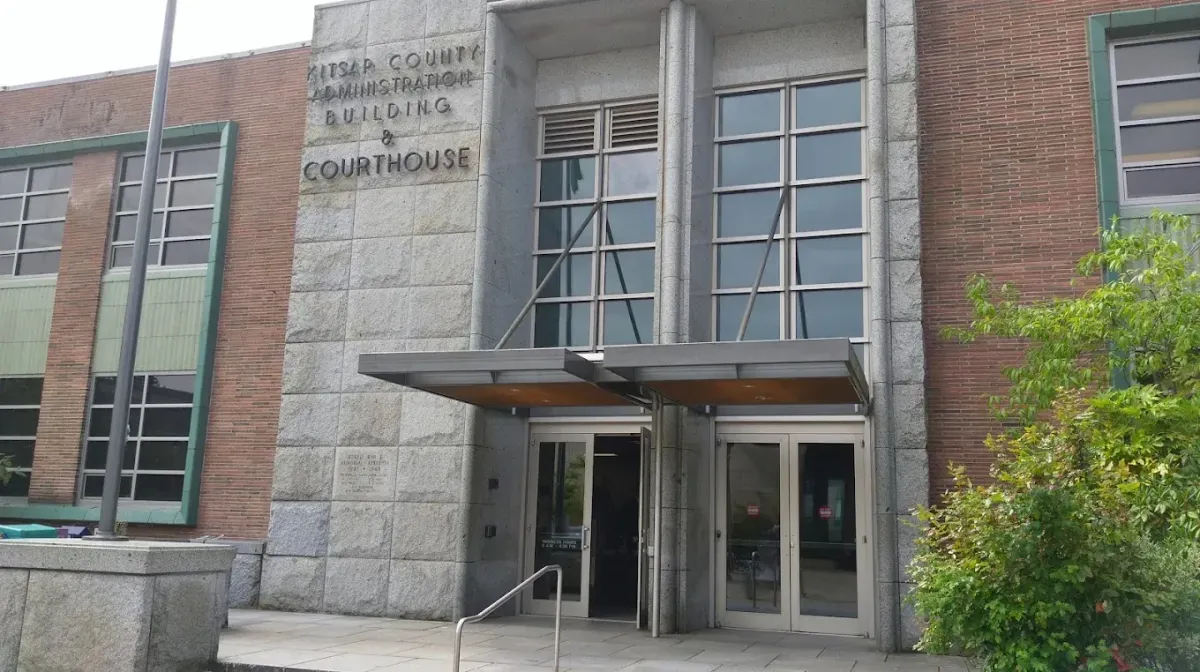
A state appeals court has thrown out a Kitsap County housing authority's eviction case, ruling that the smoking policy behind it contradicted itself so thoroughly the tenant gets the benefit of the doubt.
In an unpublished opinion filed July 28, 2026, Division II of the Washington State Court of Appeals reversed Kitsap County Superior Court and ordered dismissal of the unlawful detainer case the Kitsap County Consolidated Housing Authority, known as Housing Kitsap, brought against Jordan Robertson and her boyfriend, Ray Jackson.
Judge Rebecca Glasgow wrote, joined by Chief Judge Bernard Veljacic and Judge Meng Li Che.
Robertson moved into Heritage Apartments, which Housing Kitsap lists as a family community in Port Orchard, in 2013.
Six Notices, One Termination
Washington's Residential Landlord-Tenant Act generally allows eviction only for enumerated causes. The one Housing Kitsap used, RCW 59.18.650(2)(n)(i), requires four substantial breaches of a material lease term in 12 months before a 60-day termination notice.
Housing Kitsap counted six.
Three came out of a single day in February 2024. Property manager Kisha Thomas reported seeing Robertson smoking, then called a company to tow her vehicle; Robertson confronted her when the tow truck arrived.
Housing Kitsap issued three 30-day notices to comply or vacate: one for smoking, one alleging abusive language and interference with management, and one alleging she obstructed the driver.
Two more followed in April and July for smoking, and a sixth in July for abusive language.
The agency sent a 60-day termination notice in August 2024 and filed for unlawful detainer that November.
Robertson and Jackson received appointed counsel under RCW 59.18.640, the 2021 law making Washington the first state to guarantee lawyers to indigent tenants facing eviction.
At a March 7, 2025 show cause hearing, Kitsap County Superior Court Judge Melissa A. Hemstreet found five of the six valid, rejected the tow truck notice and issued a writ of restitution, along with a judgment of $7,986 plus interest in unpaid rent.
Unpaid rent was not a basis for the eviction. Robertson and Jackson appealed and won a stay with a bond.
A Policy That Argued With Itself
Robertson's lawyers argued the policy never clearly banned outdoor smoking. The panel agreed it was at minimum ambiguous, and Washington courts read ambiguous lease terms against the drafter.
Earlier versions ran a paragraph or two and banned smoking in common areas and within 25 feet of buildings.
The version in effect in 2024 ran three and a half pages, and the panel found its opening paragraph appeared to be missing words, listing locations without ever saying smoking was prohibited there.
The trial court had leaned on a sentence extending the policy to "all outdoor areas." The panel pointed to the parenthetical that follows it: doors, entrances, windows and porches.
That list, the court wrote, could just as easily be read as limiting the ban to spaces on or near the buildings.
The policy's disclaimers said tenants would not have to quit smoking to live there, and twice referred to designating "portions" of developments as non-smoking. Its definitions section swept sidewalks and parking areas into the term "indoor areas," which the court called an absurd result when applied to open-air lots.
Housing Kitsap argued federal rules made the ban total. Under 24 C.F.R. § 965.653, the panel said, housing authorities must ban smoking indoors and within 25 feet of buildings but need not go further.
Robertson's counsel said she would testify she smoked in an uncovered parking lot at least 25 feet from any building. That, the panel held, left a disputed fact the show cause hearing could not resolve.
Three Violations, or One
The panel's second holding is what ended the case. The policy stated that three violations "will be considered to be a serious violation of the material terms of the lease."
Its enforcement section said elsewhere that a second documented occurrence would end the tenancy.
Reading that ambiguity in the tenant's favor, the panel held the three smoking citations combined into a single substantial breach.
That left Housing Kitsap with three, one for smoking and two for abusive language, short of the four the statute demands.
A footnote adds that the two-strike enforcement clause itself violates state law.
What Happens Next
The court did not reach Jackson's claim that he was never a tenant, or the argument that the trial court wrongly refused witness testimony. Housing Kitsap's request for attorney fees was denied because it did not prevail.
Support The Olympic Herald
If this story mattered to you, help us report the next one
The Herald has no paywall and no corporate owner. Reader support is what pays for the records requests, court hours, and follow-through that accountability reporting takes.
Become a monthly supporter
Steady, recurring support is what lets us commit to long investigations instead of chasing quick hits. Members get no special perks — just the knowledge that fearless local reporting exists because of them.
$10/mo
or
$100/yr
Become a member
Cancel anytime · Secure checkout via Stripe
Give once with a card
Pick an amount below — secure Stripe checkout takes under a minute.
Want to give a different amount? Choose your own →
Secure checkout via Stripe · No account required
↺ Republish this story
Our stories are free to republish, online or in print, under these rules:
- Credit The Olympic Herald and the author, and link back to this story.
- Don't edit the story except for style, length, or to update time references.
- If you republish online, use our canonical URL so search engines credit the original.
- Don't sell the story or use it primarily to sell advertising.
Questions? Contact us.