
Commentary
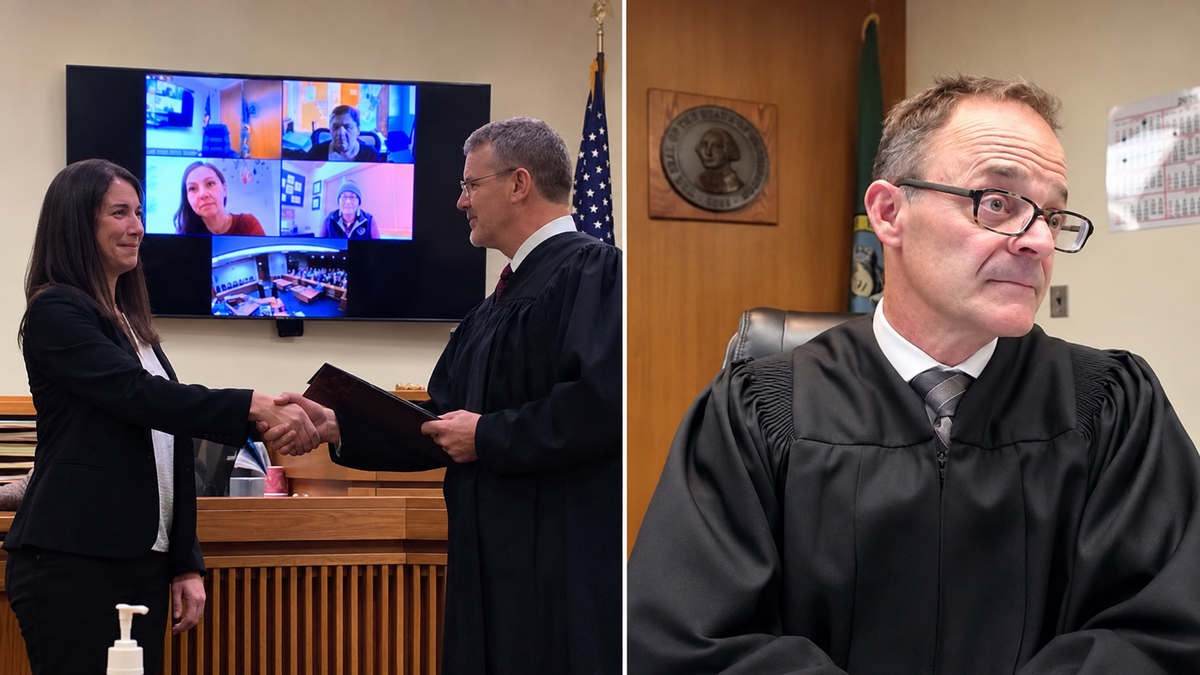
As of November 2, Clallam County Superior Court had kept me waiting 248 days for correspondence about how it handles judicial assignments. It had missed its own estimates, failed to deliver a promised installment and left readers without the records needed to examine its work.
Meanwhile, its presiding judge has found reason to warn another Olympic Herald journalist, and potentially anyone else seeking related records, about unspecified court action.
The public should be furious. A court exercises enormous authority over people’s lives. Its administration deserves persistent scrutiny, and the people doing that work should not have to wonder whether their next records request will provoke a warning from a judge.
My November 2 demand letter gives Presiding Judge Simon Barnhart until 5 p.m. Thursday, November 5, to take corrective action. If the court does not act, I intend to pursue further legal relief, including federal claims for First Amendment retaliation and viewpoint discrimination.
The damage to public accountability is already happening. Every month without these records is another month in which readers cannot assess what they show.
The Watts Emails Readers Still Cannot See
Consider the correspondence between Judge Brent Basden and former drug-court coordinator Johnny Watts.
Watts was entrusted with work in programs serving people struggling with addiction. His arrest and subsequent federal drug prosecution make the court’s supervision of him an urgent subject for reporting. The public deserves to examine how the court supervised someone entrusted with that responsibility.
Watts was arrested March 11 in Agnew while deputies were attempting to serve a warrant on another man.
Deputies reported finding a loaded handgun and suspected drugs on him. As the Herald reported from the federal complaint, investigators subsequently found hundreds of grams of methamphetamine and other narcotics in a bedroom associated with Watts.
The complaint also alleged that he admitted selling methamphetamine, cocaine and fentanyl for about $1,000 in weekly profit.
On June 4, visiting Kitsap County Judge Cadine Ferguson-Brown dismissed the state charges without prejudice as the case moved to federal court.
The following day, Watts appeared in U.S. District Court in Tacoma and pleaded not guilty to a federal charge of possession of controlled substances with intent to distribute.
On March 23, I requested Basden’s emails with Watts from 2018 through 2024. The court denied the request four days later as involving chambers records.
On April 29, Barnhart directed further inquiry into whether responsive emails existed and whether Watts had acted in an administrative or chambers staff capacity.
As of November 2, 187 days after Barnhart directed that further inquiry, I had received none of the correspondence.
Those emails could help establish how the court supervised Watts and what concerns, if any, reached Basden. Readers deserve the opportunity to examine that record. Every month of delay postpones reporting the public needs to judge the court’s performance.
The court controls the records needed to scrutinize its own handling of Watts. Its delays have kept that correspondence beyond The Herald’s reach while the public waits for answers. That is an accountability failure in its own right.
The court should not expect public confidence while denying readers the means to test it. Release the disclosable records, identify what is withheld and explain the legal basis. The people who depend on this justice system deserve more than another month of waiting.
Basden’s Words About Police Deserve Answers
The need for scrutiny extends beyond Watts. As I previously reported, Basden said that “law enforcement deepens the problem” when discussing police involvement in concerns about children’s safety.
Those words deserve scrutiny of their own. When officers respond to concerns about a child’s welfare, the public deserves a clear explanation of any claim that their involvement made matters worse. The weight of a judicial title should never substitute for that explanation.
Basden owes the public specifics. What did the officers do wrong? What evidence supported his assessment? He should identify the conduct he was criticizing and explain his objection. Officers deserve criticism grounded in their actual conduct. People seeking help deserve confidence that reporting a safety concern will be taken seriously.
A judge’s words carry consequences beyond the courtroom. The possibility that someone could hear that remark and hesitate to seek police assistance should alarm this community. Nobody should have to weigh an urgent safety concern against fear of a powerful official’s disapproval.
The Robe Does Not Make Him the County’s Supervisor
The concern about the reach of judicial authority also appears in Basden’s November 30, 2020 email to then-County Commissioner Bill Peach, which the Herald previously published.
Peach had publicly criticized judicial retirements that allowed the governor to appoint replacements. Basden responded from his county email account, copied Commissioners Randy Johnson and Mark Ozias and signed with his judicial title.
Basden defended the appointment process and rejected the suggestion of coordination between branches of government. He also called the suggestion “irresponsible” and expressed disappointment that Peach had spoken publicly without first consulting the judges to “test your theory.”
Peach was an elected representative speaking about public business. He did not owe Basden advance clearance of his newspaper comments. Attaching a judicial title to that rebuke gave a political disagreement the weight of the court’s prestige.
Judges can explain court administration and evaluate police work in cases before them. But the robe does not make Basden the county’s supervisor. Commissioners, investigators and journalists have responsibilities of their own.
These episodes demand scrutiny of how Basden uses the authority of his office. Judicial independence cannot mean that everyone else must defer to a judge’s preferences about what they say or whom they ask for help.
That is why these barriers to reporting are so unacceptable. The court exercises power over families, evaluates the work of investigators and controls access to records about its own administration. The public deserves the means to scrutinize how it uses that power.
Barnhart Cannot Outsource Accountability
The assignment emails tell a similar story of delay.
After a March 5 clarification, the court estimated a full response within 25 business days. On April 10, it estimated another 20 business days. On May 8, it asked for at least 25 more. On June 16, it promised a first installment by July 10.
Nothing arrived. The July 10 and July 24 updates supplied no production date.
On October 16, Barnhart wrote that “this project is not one that can be completed expeditiously,” again without providing an estimate. As my letter recounts, his statement indicated that he had already reviewed two installments of completed email threads. None had been released to me.
The court’s October 16 response invoked the county, saying it “neither receives nor demands preferential treatment in the County’s processing of records requests.” That is buck-passing. Barnhart should account for his court’s handling of these requests instead of directing attention to another office’s workload.
In my experience, Clallam County’s public record officer and staff do an excellent job handling requests. They deserve credit for their work. The court should stop using the county’s processing arrangements as an excuse for its own failure to produce records.
These requests were made to the court. GR 31.1 places the obligation to respond on the court. County assistance with retrieving records does not transfer that responsibility or make county staff accountable for the court’s withholding decisions, its sequential policy or Barnhart’s warning to requesters.
Most glaringly, Barnhart had already reviewed two installments of email threads. Invoking the county’s queue does not explain why the court had released none of that correspondence.
A search identifying roughly 57,500 potentially responsive documents does not answer that question either. The court must account for the work it has completed, release the records that can be disclosed and explain any withholding. Barnhart cannot outsource accountability.
The court compounds the problem with its one-at-a-time processing policy, making completion of one request the condition for work on others. A large search becomes an obstacle to reporting on additional subjects. Readers lose access to whole lines of inquiry while the queue stands still.
Washington’s rule for judicial administrative records, GR 31.1, already addresses requests that strain resources.
It requires an attempt to agree on a manageable scope and timeline, potentially including installments. It also calls for a new good-faith estimate when the court cannot meet its earlier estimate. My letter challenges the court’s substitution of a blanket queue for that process.
A Judge’s Warning to “Any Other Person”
The October 6 warning makes this more disturbing.
Another Olympic Herald journalist requested AI prompts and outputs created or used by Basden and former Commissioner Brian Parker. Barnhart denied the request as chambers records and said it appeared I was using that journalist to circumvent the sequential policy.
The request was submitted under the journalist’s own name and openly copied me. She disputed his characterization.
Barnhart warned that future requests from her “or any other person” that were “suggestive of an effort to deceive the Court as to the identity of the true requesting party may be denied, or may be subject to other appropriate action by the Court.”
What is a member of the public supposed to do with that warning? Guess what conduct the judge might regard as deceptive? Guess what “other appropriate action” might follow?
Journalists working together routinely pursue overlapping questions. That collaboration deserves no presumption of deception. If Barnhart has evidence of deception, he should identify it. An undefined warning reaching “any other person” leaves everyone else to calculate the risk of asking.
In my view, that is intimidation. A warning from a sitting judge carries weight, and uncertainty about its consequences can discourage requests before they are ever submitted.
Equal Access Should Not Require a Fight
Even ordinary court announcements raise questions about equal treatment.
When I asked in February to join the court’s distribution list, Court Administrator Lacey Halberg told me that “[n]o other persons are, or will be, copied on our correspondence to the Bar.”
Yet a May 19 announcement about a commissioner’s appointment went to the bar and four news organizations in one message. The Herald was left off. I obtained the email through a records request to the county.
A newspaper should not have to file a records request to discover an announcement the court supplied directly to other newsrooms. A critical publication deserves the same access as its competitors.
The Court Must Answer to the Public
My demands are practical: release the records that can be disclosed, provide dates, process the stalled requests, withdraw the warning, identify the responsible decision-makers and an independent reviewer for decisions Barnhart made personally, explain review rights and give The Herald equal access to court announcements.
The court can address those demands now. Further litigation will consume time that should be spent reporting, reviewing records and serving the public.
The people of Clallam County should not have to settle for whatever their court chooses to tell them about itself. They deserve access to the evidence needed to judge its performance.
Judge Barnhart should release that evidence wherever the law permits, explain any withholding and stop leaving journalists to wonder what the court might do to them for asking.
↺ Republish this story
Our stories are free to republish, online or in print, under these rules:
- Credit The Olympic Herald and the author, and link back to this story.
- Don't edit the story except for style, length, or to update time references.
- If you republish online, use our canonical URL so search engines credit the original.
- Don't sell the story or use it primarily to sell advertising.
Questions? Contact us.