
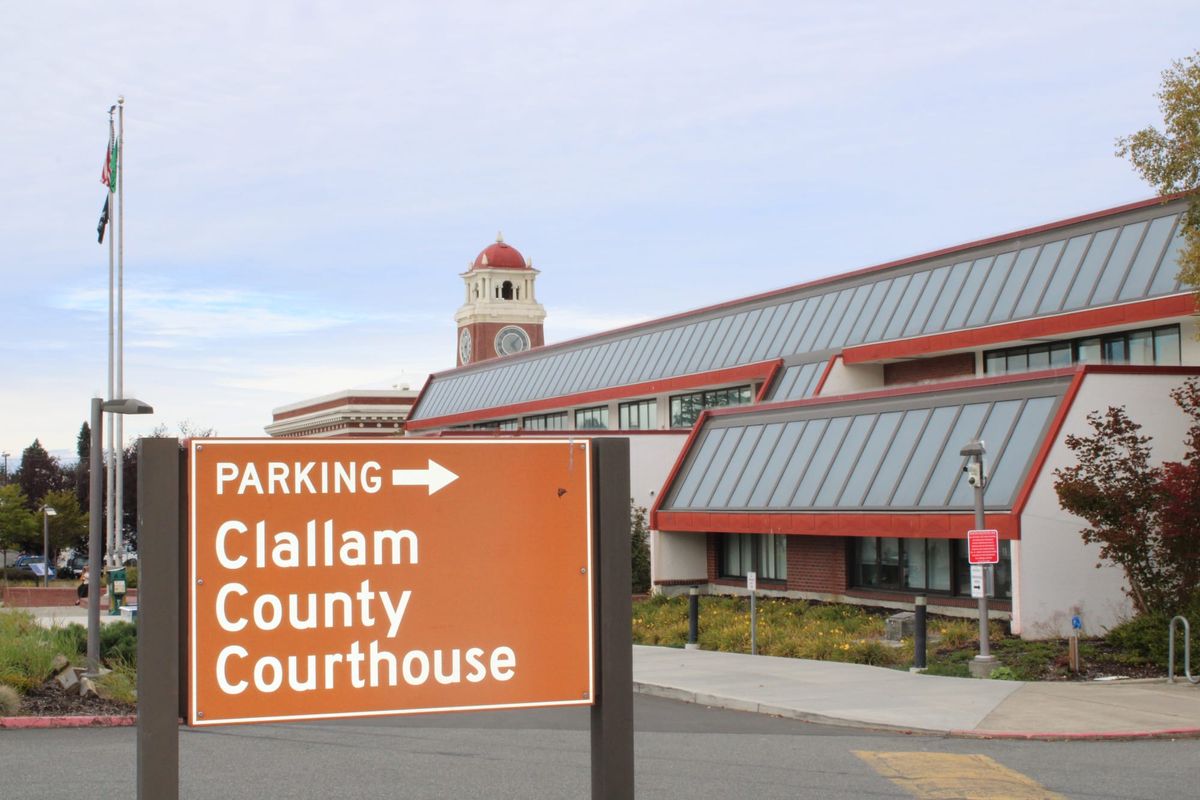
Clallam County Superior Court Judge Simon Barnhart dismissed the second-degree rape charge against former Sequim police officer Christian Whitaker on Monday, finding prosecutors had not produced sufficient evidence independent of Whitaker’s statements to establish the charged crime.
The order dismisses the rape count with prejudice. It applies only to that charge and leaves the separate charges of first-degree voyeurism and disclosing intimate images intact.
Whitaker pleaded not guilty to all three charges.
The case stems from an alleged incident at Whitaker’s home near Sequim on July 1, 2024, while he was employed by the Sequim Police Department. The rape charge alleged that the woman was incapable of consenting because she was mentally incapacitated or physically helpless.
Judge Barnhart heard arguments September 22 on a motion by defense attorney Karen Unger, who argued that the rape charge lacked independent corroborating evidence.
Unger invoked Washington’s corpus delicti rule. As Judge Barnhart explained it, prosecutors must present evidence independent of a defendant’s out-of-court statements supporting a logical and reasonable inference that the charged crime occurred.
The evidence need not be sufficient for a conviction and must be viewed in the prosecution’s favor, but it must also be inconsistent with a hypothesis of innocence.
Judge Barnhart separately considered the two sexual encounters Whitaker described to investigators.
Special deputy prosecutor Chris Ashcraft opposed dismissal, arguing that a video Whitaker recorded established a sexual act and that photographs, the woman’s account and her physical condition provided evidence she could not consent.
In its September 11 response, the prosecution cited the woman’s report that she drank two shots of vodka, told Whitaker she needed to return home and then had no memory of events until the next morning. She reported unexplained bruises, loss of bladder control and waking with vomit in her hair and on her face, according to the filing.
Prosecutors also pointed to a photograph sent to Whitaker’s friend at 8:57 p.m., which they described as showing the woman apparently unconscious, and a video sent four minutes later showing oral sex. A later photograph showed her in bed with vomit on and around her, according to the state’s response.
Ashcraft argued that the evidence, considered together and in the prosecution’s favor, met the threshold necessary to keep the rape charge in the case.
Both sides agreed that Judge Barnhart could consider the video in deciding the motion. The judge found that it established oral sex, which falls within Washington law’s definition of sexual intercourse.
The remaining question was whether independent evidence supported an inference that the woman was mentally incapacitated or physically helpless at the time.
Under the definitions cited in the order, mental incapacity prevents a person from understanding the nature or consequences of sexual intercourse. A physically helpless person is unconscious or otherwise physically unable to communicate unwillingness.
Judge Barnhart noted that words or conduct indicating agreement do not excuse sexual intercourse with someone shown to be mentally incapacitated. He found the evidence here insufficient to establish that incapacity or physical helplessness.
Judge Barnhart found the earlier photograph inconclusive. The image available to the court was roughly an inch and a half square and of low resolution, and prosecutors said a higher-quality version was unavailable.
The judge wrote that he could not clearly determine whether her eyes were open or closed and that her position could indicate sleeping or relaxing. He described the prosecution’s characterization of her as apparently unconscious as speculative.
In discussing the video, Judge Barnhart wrote that the woman did not appear mentally incapacitated or physically helpless under the standards applicable to the charge.
“As a whole, while the evidence may support an inference that [the women] was impaired during the oral intercourse, it is insufficient to support the inference that [the women] was mentally incapacitated or physically helpless at the time,” he wrote.
Regarding the alleged bedroom intercourse, Judge Barnhart found insufficient evidence independent of Whitaker’s account to establish that it occurred. He cited the woman’s statements to investigators that she did not remember what happened and was unsure whether there had been sexual contact.
The judge found that her descriptions of substances she thought might be condom lubricant or semen did not sufficiently corroborate Whitaker’s statements about intercourse in the bedroom.
The separate charges concern allegations that Whitaker recorded the woman without her consent and sent the recording to a friend.
According to the probable cause report filed with the prosecution’s response, Whitaker acknowledged that she had not consented to the recording or its disclosure. Monday’s order does not decide those charges.
As we previously reported, Whitaker was placed on administrative leave in July 2024, with his police powers revoked, and resigned in August 2025 shortly after charges were filed.
We reported in July that Judge Barnhart had moved the trial from September 14 to November 2, granting the defense additional preparation time over the prosecution’s objection. A status conference is scheduled for this Friday at 9:00 AM.
↺ Republish this story
Our stories are free to republish, online or in print, under these rules:
- Credit The Olympic Herald and the author, and link back to this story.
- Don't edit the story except for style, length, or to update time references.
- If you republish online, use our canonical URL so search engines credit the original.
- Don't sell the story or use it primarily to sell advertising.
Questions? Contact us.