
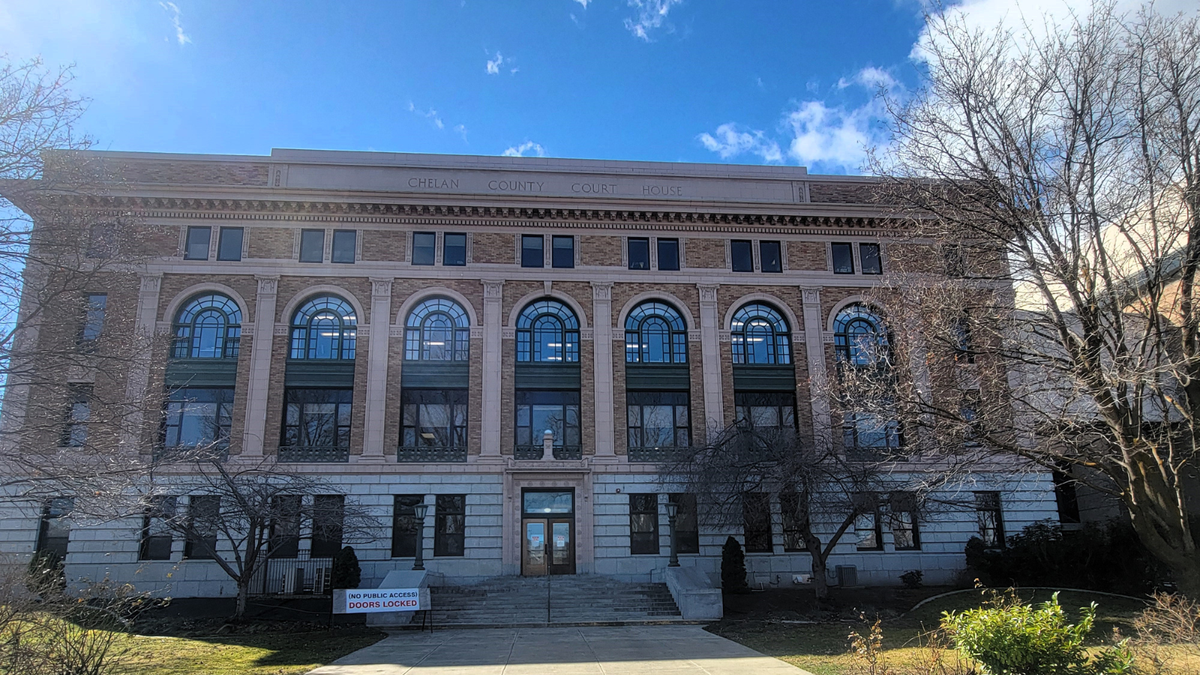
The Washington Court of Appeals on Thursday reversed Chelan County Superior Court Judge Kristin Ferrera’s dismissal of a civil conspiracy claim arising from a mosquito control dispute, also overturning attorney fees and sanctions imposed against the woman who brought the lawsuit.
The unanimous October 1 decision allows Andrea Walheim to proceed with her claim against Matthew Oaks, a mosquito abatement operator she accused of joining an effort to force her to violate pesticide regulations or leave her position on the local mosquito control board.
The court did not determine whether a conspiracy occurred or whether anyone violated pesticide rules.
It ruled that Walheim’s allegations were sufficient to survive the motion to dismiss, which required the court to presume the facts alleged in her complaint were true.
Judge Tyson Hill wrote the unpublished opinion for Division III, with Judges Tracy Staab and Robert Lawrence-Berrey concurring. The case returns to Chelan County Superior Court.
Walheim moved to the Chiwawa River Pines community in 2016 and later became concerned about pesticide spraying, according to the opinion’s account of her allegations.
After Mosquito Control District 4 was formed in late 2020, Chelan County commissioners appointed her to its board. She eventually became board president.
Walheim alleged that her efforts to secure permits and bring mosquito control practices into compliance with regulations met resistance from other board members and community members.
She accused Oaks of agreeing with others to portray her falsely and pressure her out of office so they could continue practices she contended were unlawful.
Oaks offered a different account of the conflict. According to the opinion, when he resigned his role with the district in July 2022, he asked county commissioners to request Walheim’s resignation.
He asserted that she berated board members, missed deadlines, refused to cooperate with a pest management plan and created a combative relationship with other members.
Walheim sued Oaks, the Chiwawa Communities Association and several other individuals in February 2023. She removed her defamation claim after Oaks gave notice that he intended to seek dismissal under Washington’s Uniform Public Expression Protection Act, arguing that the statements at issue were protected.
Walheim maintained that her claim could survive but said she dropped it to avoid a pause in the proceedings under that law. Civil conspiracy remained as her sole claim.
Walheim later told the trial court that the alleged harassment had stopped and she could effectively administer the district. With her request for an injunction largely moot, she offered to dismiss the defendants without prejudice.
All accepted except Oaks, who sought dismissal with prejudice and approximately $30,000 in attorney fees. Walheim rejected those terms. The opinion does not specify the amount of fees the trial court later awarded.
Oaks then moved to dismiss, arguing that Walheim had failed to establish an agreement to conspire or identify an underlying wrongful act.
Ferrera dismissed the claim with prejudice in June 2023, primarily because the amended complaint did not allege sufficient facts establishing an agreement.
The appeals court concluded that the complaint met Washington’s pleading requirements. At this stage, the panel explained, a plaintiff needs a short, plain statement showing an entitlement to relief, rather than proof establishing the claim.
Although Walheim did not explain how or when an agreement was reached, her allegation that Oaks had joined an agreement with the other defendants was enough at this stage, the panel said.
“Had Walheim not alleged there was an agreement, the trial court’s ruling would have been correct,” Hill wrote.
The panel also found sufficient allegations to proceed on Walheim’s theory that the defendants used unlawful means by portraying her in a false light. It expressly declined to decide whether the statements she challenged were false or offensive.
The trial court had denied Oaks’ request for fees under the public expression law but awarded fees and sanctions under separate provisions governing frivolous lawsuits and improper court filings. The appeals court reversed the fees and sanctions imposed against Walheim at this stage of the case.
The panel sent the case back to superior court, where the parties may proceed with discovery if they cannot reach a resolution.
↺ Republish this story
Our stories are free to republish, online or in print, under these rules:
- Credit The Olympic Herald and the author, and link back to this story.
- Don't edit the story except for style, length, or to update time references.
- If you republish online, use our canonical URL so search engines credit the original.
- Don't sell the story or use it primarily to sell advertising.
Questions? Contact us.