
On Thursday evening, comments left by members of the public on the “Judge Ferguson-Brown” Facebook page began to disappear.
By Friday morning, the public could no longer comment at all.
Post after post on the page now carries the same quiet notice from Facebook: “Judge Ferguson-Brown limited who can comment on this post.”
That includes a Happy Fourth of July graphic. It includes a shared Washington Courts post inviting the public to watch a judicial symposium on TVW, the state’s public affairs network. That official post urges readers to “join the conversation.”
On Judge Ferguson-Brown’s page, the conversation is now closed.
A Page Wearing the Robes of Office
This is not some private account.
The page operates under Cadine Ferguson-Brown’s judicial title. Facebook categorizes it as a “Public & Government Service.”
Its description is a statement about the performance of her official duties: “Judge Ferguson-Brown is committed to providing justice to everyone in our community.”
The page publishes and amplifies official judicial-branch content, including materials from the Washington State Administrative Office of the Courts, alongside photographs from official judicial trainings and events.
Nowhere is the page designated as personal.
It does, however, link to something else entirely: retainjudgeferguson-brown.com, the judge’s campaign website.
Official trappings on one side. Campaign promises on the other. And as of Friday morning, a locked comment section for the general public in between.
“My Oath to Uphold the Constitution Now Applies”
Judge Ferguson-Brown has described, in her own words and in unusual detail, the precise moment she believes her constitutional obligations attach.
“Every time I’m gonna go up on the bench, instead of just putting on my robe, I step into my robe,” she explained in a September 2023 interview with MasonWebTV, while she still sat on the Mason County bench. “So I put my feet in first, and then I put my hands in, and then I zip myself up, and what that does is that signifies to me that, okay, here we go, my oath to uphold the Constitution now applies. My oath to follow the laws of the state of Washington now applies.”
In the same interview, she offered her own measure of judicial success: “One of the comments that I keep hearing from people who have appeared before me is that I make them feel like they have been heard, whether or not I rule in their favor. That is what we want, because that is how we build confidence in our judicial system.”
Hold those two statements up against this week.
A judge who locates her constitutional oath in the zipping of a garment now fronts a page where the Constitution’s oldest guarantee has been switched off, post by post.
A judge who says public confidence is built by making people feel heard now presides over a forum where no member of the public can be heard at all.
The First Amendment is not a robe. It does not apply only when zipped, and it does not come off at the end of the docket. A page that claims the authority of judicial office carries the obligations of that office with it: on the bench, off the bench, and online.
What the Supreme Court Has Said
The United States Supreme Court has described social media platforms as “perhaps the most powerful mechanisms available” for a private citizen “to make his or her voice heard,” and recognized that constituents use them to petition their representatives directly. Packingham v. North Carolina (2017).
Federal appellate courts have applied that logic to the comment threads of officials’ pages, holding that the interactive spaces of a public official’s social media account are themselves forums for speech. Davison v. Randall (4th Cir. 2019); Knight First Amendment Institute v. Trump (2d Cir. 2019) (later vacated as moot after the account holder left office).
In 2024, a unanimous Supreme Court went further. In Lindke v. Freed, the Court held that a public official’s social media conduct amounts to state action, and can therefore violate the First Amendment, when the official has actual authority to speak for the government and purports to exercise that authority through the page.
Lindke also contained a warning that reads as if it were written for this exact page. When an official fails to clearly designate a page as personal, and instead mixes official content with everything else, the Court cautioned that the official is exposed to greater potential liability for restrictions that operate across the entire page, because those restrictions necessarily suppress speech on the page’s official content too.
The “limit who can comment” restriction now blanketing the Judge Ferguson-Brown page, official Washington Courts content included, is precisely that kind of page-wide restriction.
Washington Has Already Litigated This. It Cost Taxpayers.
None of this is theoretical, and Washington officials do not need to leave the state for a cautionary tale.
In Leighty v. Spokane County, a federal court in Eastern Washington took up the case of a citizen whose critical comments were hidden on the Spokane County Sheriff’s Office Facebook page while flattering ones stayed up.
Applying the Lindke framework, the court found the page operated with the government’s actual authority. The result: a First Amendment ruling against the county, a federal injunction, and a $58,000 payment to the man the government tried to mute. The Sheriff’s Office is now barred from hiding or deleting critical comments, and under the court’s order cannot even reopen its comment sections without a judge’s permission.
Viewpoint discrimination, the Supreme Court has said, is “an egregious form of content discrimination,” impermissible in any forum. Rosenberger v. Rector (1995).
And the government cannot dodge that rule by simply shuttering a forum in response to speech it dislikes. The Court held four decades ago in Cornelius v. NAACP Legal Defense Fund that denying a speaker access solely to suppress their point of view violates the First Amendment.
Delete the comments one evening. Lock the entire forum by the next morning. If a court were to conclude that sequence was aimed at suppressing criticism, the case law is not forgiving.
Five Months Ago, a Clallam Courthouse Ran the Same Play
Readers of this publication do not even need to look east. They have watched this exact sequence before: this year, in this region, on this platform, at a courthouse where Judge Ferguson-Brown has sat as a visiting judge.
In February, this publication documented the Clallam County Superior Court using the identical Facebook tool, “limit who can comment,” to curate its own audience: praise permitted on posts celebrating court officials, dissent locked out.
After I sent a formal letter to the court’s judges, the restrictions came off, and the public began to speak. Much of what it said was critical, particularly of former Court Commissioner Brian Parker.
Within roughly 48 hours, the court’s entire Facebook page was deleted.
Internal emails later obtained by the Herald showed what that decision looked like from the inside. On the morning of February 13, as the unfiltered comments arrived, Deputy Court Administrator Kaysey Clayton wrote to county IT: “I tried to disable all comments but it will not give me access to do that. Can you please turn off ALL commenting immediately?” She asked that the court administrator and the presiding judge be notified the moment the shutdown was complete. IT replied that there was no reliable way to switch off commenting across the page. By the next afternoon, the page was simply gone.
Restrict the critics. Face the criticism anyway. Close the forum rather than tolerate it.
That is the arc the Clallam County Superior Court traveled over 48 hours in February. It is the arc the Judge Ferguson-Brown page traveled in a single night this week.
There is a difference between the two cases, and it matters. The Clallam page was unambiguously governmental. The Ferguson-Brown page is a mixed-use page, with official trappings, campaign links, and no personal designation. That is exactly the configuration Lindke warned exposes an official to greater liability when restrictions sweep across the whole page.
And there is one more lesson in the Clallam episode, directed at whoever administers the Ferguson-Brown page. Every step of February’s shutdown was reduced to writing, captured in public records, and ultimately published: who asked for it, what they asked for, when, and why. Comment sections can be closed. Paper trails cannot.
The Timing Invites an Obvious Question
What happened between Thursday evening and Friday morning?
On Thursday, we published our investigation into the judge’s campaign finance history: state regulators warned Ferguson-Brown over campaign disclosures in 2023, and her next campaign failed to disclose again.
The same day, we published a commentary examining the mounting public outrage over her record, including her June 5 decision granting a Special Sexual Offender Sentencing Alternative to a convicted Silverdale child molester, sparing him a state prison term.
Public criticism of the judge, online and off, has been building for weeks.
To be clear about what I know and what I don’t: I do not know who administers the Judge Ferguson-Brown page. Identifying every administrator is one of the things I have asked the court to preserve records on. What is documented is what the page did, because Facebook’s own notices announce it, and when the page did it.
A forum that was open to the public until the criticism arrived, and closed once it did, invites exactly the inference the Supreme Court warned about in Cornelius: that access was denied to suppress a point of view.
In February, it took the Clallam court about 48 hours to go from open criticism to a destroyed page. This week, it took one night to go from a published investigation to a silenced one.
What I’ve Asked the Judge to Do
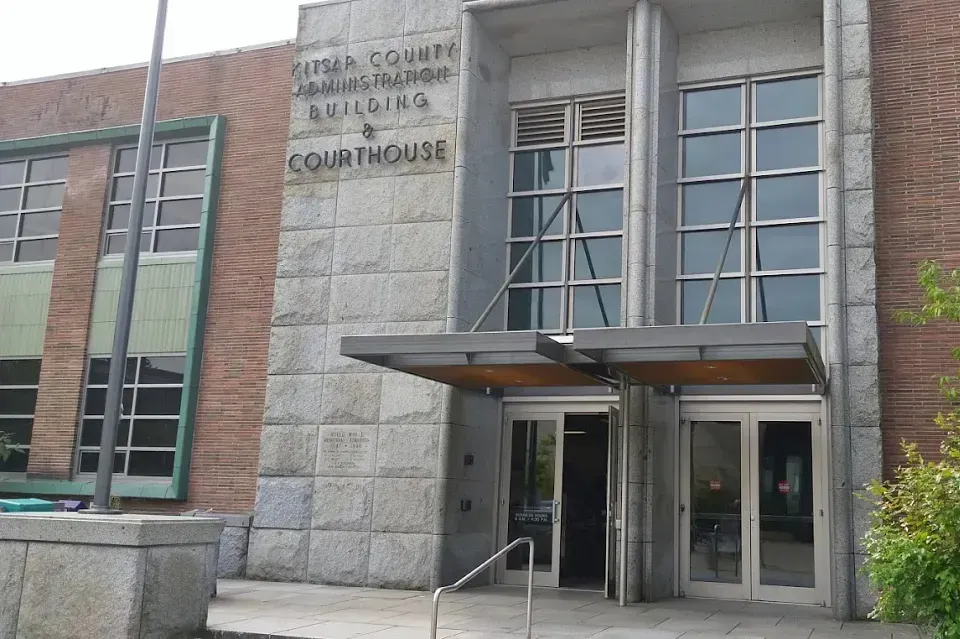
On Friday afternoon, I sent a letter to Judge Ferguson-Brown, copying Kitsap County Superior Court Presiding Judge Jennifer Forbes.
The letter asks for three things: restore the comments deleted from the page on July 16; remove the “limit who can comment” restrictions applied across its posts; and preserve all records relating to the page’s administration and moderation, including deleted or hidden comments, moderation logs, and the identities of all page administrators, in anticipation of potential litigation.
It also poses a simple question. What are the criteria? By what undisclosed standard does this page decide which constituents may speak and which may not?
If there is a neutral, lawful explanation for what happened this week, the letter invites the judge to provide it.
Both Judge Forbes and Judge Ferguson-Brown were offered the opportunity to comment before publication. Neither had responded by press time.
The Fix Is Simple
Lindke leaves every public official a clean path: keep a personal page, clearly label it personal, and moderate it however you like.
The Judge Ferguson-Brown page took a different path. It wrapped itself in a judicial title, a government category, official court content, and a promise of “justice to everyone in our community.” Having claimed the authority of the office, the page took on the office’s constitutional obligations along with it.
The public square does not get to close because the public showed up with criticism. The First Amendment does not make an exception for judges, least of all one who has explained to the public, on camera, the exact moment her oath to uphold the Constitution “applies.”
By her account, that moment arrives when the robe zips shut. But the oath is not the robe. It does not unzip.
Restore the comments. Reopen the forums. Or explain, on the record, the neutral rules that justify closing them.
↺ Republish this story
Our stories are free to republish, online or in print, under these rules:
- Credit The Olympic Herald and the author, and link back to this story.
- Don't edit the story except for style, length, or to update time references.
- If you republish online, use our canonical URL so search engines credit the original.
- Don't sell the story or use it primarily to sell advertising.
Questions? Contact us.