
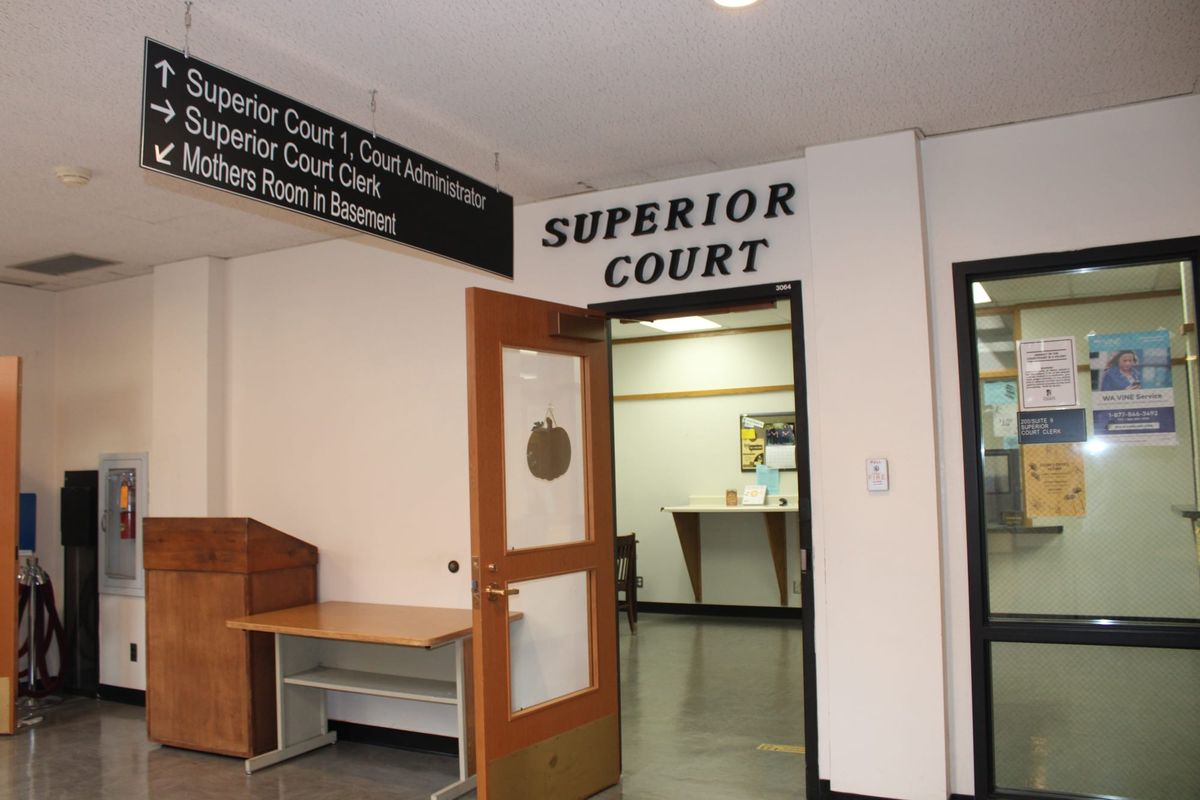
Prosecutors are asking Clallam County Superior Court Judge Simon Barnhart to let the state’s appeal of his rape-charge dismissal proceed before the remaining charges against former Sequim police officer Christian Whitaker are resolved.
In an October 30 motion, special deputy prosecutor Chris Ashcraft argues that waiting until the remaining charges are resolved could force the woman who reported the alleged assault to testify at two trials if the rape charge is reinstated.
Whitaker is also challenging search warrants, arguing investigators omitted information favorable to his defense. Ashcraft opposed those motions in responses filed on October 27.
Barnhart signed an agreed order Nov. 3 moving the hearing on the prosecution’s motion from Nov. 4 to Nov. 18 at 9 a.m., when defense motions were already scheduled to be heard.
The second-degree rape count remains dismissed with prejudice. Separate charges of first-degree voyeurism and disclosing intimate images remain unresolved. Whitaker pleaded not guilty to all three charges.
Seeking review of Barnhart’s dismissal
As The Olympic Herald reported Oct. 27, prosecutors filed a notice of appeal Oct. 22 challenging Barnhart’s Oct. 5 dismissal and his Oct. 16 denial of reconsideration. Division II of the Washington Court of Appeals has opened the case.
The two remaining charges create an additional procedural step. Under Washington’s appellate rules, an appeal as a matter of right from a judgment resolving fewer than all counts requires the trial court to expressly direct entry of judgment and find, in writing, that there is “no just reason for delay.”
Without those steps, review before final resolution of all counts is discretionary.
Ashcraft is asking Barnhart to enter those findings so the appeal can proceed while the other charges remain pending.
Waiting until after a trial on the remaining charges would postpone the appeal and could require a second trial if the rape count is restored, Ashcraft wrote.
Starting appellate review now could help keep the charges together if a court grants a stay or Whitaker waives speedy-trial rights, he argued.
Ashcraft argued that the woman has awaited resolution since July 2024 and that each additional month prolongs the stress of an unresolved prosecution. He contended that beginning the appeal would not unfairly prejudice Whitaker or change his rights on the remaining charges.
The ruling prosecutors want overturned
The case stems from an alleged July 1, 2024, incident at Whitaker’s home near Sequim, while he was a city police officer.
Barnhart dismissed the rape count under Washington’s corpus delicti rule, which requires evidence independent of a defendant’s out-of-court statements supporting a logical and reasonable inference that the charged crime occurred.
For the recorded sexual encounter, Barnhart found that evidence of impairment did not sufficiently support an inference of mental incapacity or physical helplessness. He separately found insufficient independent evidence that the alleged bedroom intercourse occurred.
Ashcraft’s challenge concerns how Barnhart evaluated that evidence.
In his Oct. 15 request for reconsideration, he argued that the judge failed to consider the evidence together and draw reasonable inferences in the prosecution’s favor, as the dismissal standard required.
Prosecutors pointed to the woman’s account and prolonged illness, along with a photograph sent to Whitaker’s friend and a video of sexual activity sent four minutes later. Barnhart found the small, low-resolution photograph inconclusive and the prosecution’s interpretation that it showed an unconscious woman speculative.
Ashcraft argued that the brief interval between the photograph and video, viewed alongside the other evidence, did not support a conclusion that she had regained the capacity to consent.
Barnhart denied reconsideration Oct. 16 in a one-page order that offered no additional analysis.
Defense challenges omitted information
The warrant dispute concerns a Sept. 15, 2026, application for Whitaker’s employment records and an earlier July 2024 affidavit, according to the prosecution’s responses.
Whitaker’s attorney, Karen Unger, is seeking a Franks hearing to challenge the warrant affidavits. Such a hearing requires a substantial preliminary showing that investigators intentionally or recklessly misstated or omitted information material to probable cause.
The defense asks the court to exclude evidence obtained through the warrants.
In passages from the defense motion reproduced in the prosecution’s response, the defense argues that investigators failed to disclose the woman’s statements to medical providers that she did not believe intercourse had occurred, her lack of memory and other medical information.
The defense also argues that the contents of the video should have been presented to the judge considering the warrant.
“There is no explanation for its exclusion other than it was deliberately omitted,” the defense argued in a passage quoted by the state.
Ashcraft disputes both the significance of the information and the defense’s claim that its omission warrants a hearing.
He argues that the woman’s inability to remember sexual activity, considered alongside the recorded encounter and Whitaker’s statements, supports the prosecution’s claim that she lacked capacity to consent.
He argues that the defense has offered speculation about investigators’ intent rather than evidence sufficient to require a hearing.
“Confusion about the Detective’s evidentiary choices is not an offer of proof,” Ashcraft wrote.
The prosecution further argues that the warrant application included statements favorable to Whitaker, including his denials that he drugged the woman or committed wrongdoing and his encouragement that she undergo further testing.
In a supplemental response, Ashcraft addresses a discrepancy between the woman’s statement in a sexual-assault protection-order petition that she went to Olympic Medical Center the next morning and records showing she called 911 shortly before 5 p.m. July 2, 2024.
The defense argued that the earlier account conveyed urgency, according to the state’s filing. Ashcraft contends the difference does not undermine probable cause or establish an intentional or reckless omission.
Ashcraft also argues that the video and Whitaker’s reported admission that he recorded the woman without her knowledge or consent support the separate voyeurism charge, regardless of the dispute over the rape allegation.
Prosecutor says trial unlikely before January
Barnhart had moved the trial from September to Nov. 2 over the prosecution’s objection in July, finding the defense needed additional preparation time. At the Oct. 23 hearing, both sides agreed to remove the November trial date and schedule arguments on the defense motions.
Ashcraft now says January 2027 is the earliest realistic trial window. His motion cites unresolved motions, shortened holiday weeks and his previously disclosed vacation from Nov. 26 through Dec. 20.
He identifies Jan. 4 as the next full trial week after those conflicts. That is the prosecutor’s assessment of when trial could begin, not a date set by the court.
The Nov. 18 hearing is scheduled for 9 a.m.
↺ Republish this story
Our stories are free to republish, online or in print, under these rules:
- Credit The Olympic Herald and the author, and link back to this story.
- Don't edit the story except for style, length, or to update time references.
- If you republish online, use our canonical URL so search engines credit the original.
- Don't sell the story or use it primarily to sell advertising.
Questions? Contact us.