
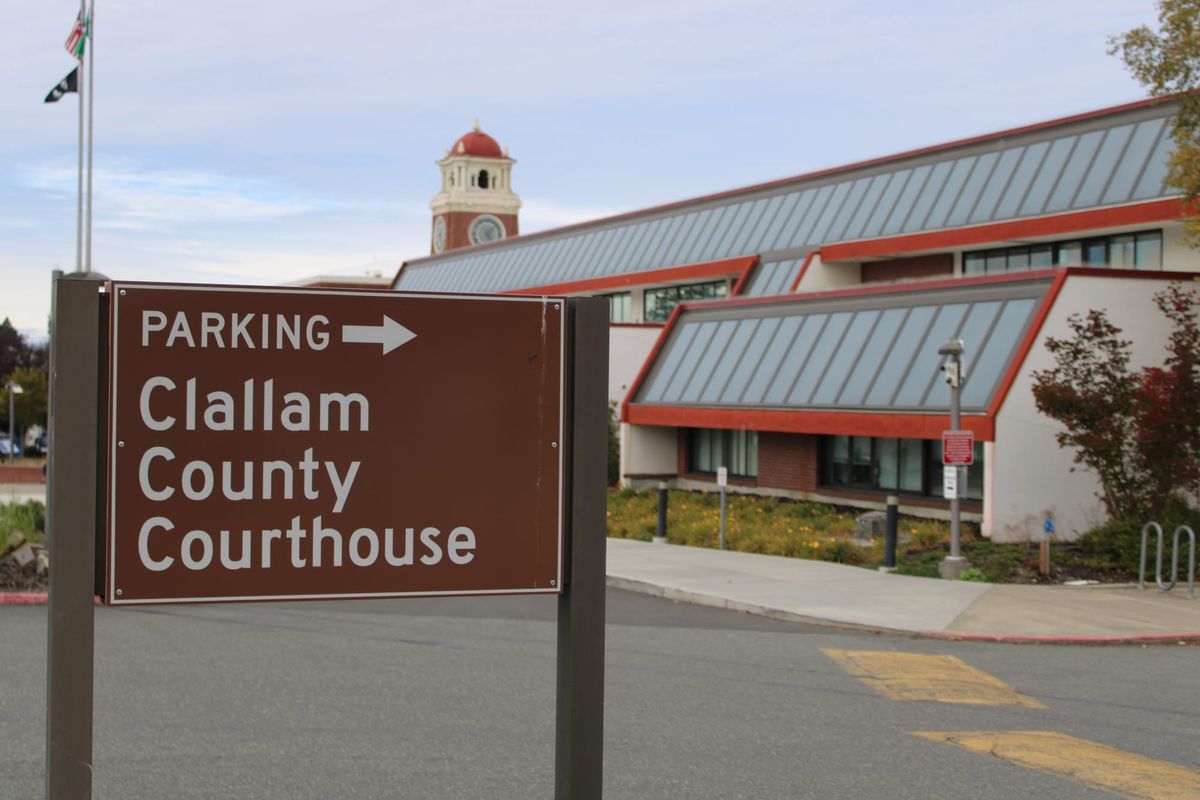
Judge Simon Barnhart has ordered my search-warrant records lawsuit sent to King County, declaring that Clallam County Superior Court is conflicted and that even a visiting judge would not sufficiently ensure the appearance of fairness.
“Unquestionably, this Court is conflicted and cannot take action on the substantive requests put before it by Petitioner,” Barnhart wrote in his October 16 order.
The presiding judge’s decision moves the challenge to his court’s refusal outside its own bench and administration.
Judge Barnhart upheld the withholding of the warrant logs in July, during the court’s internal review process. The subsequent lawsuit asks another judicial officer to overturn that refusal and order access to the records.
I submitted the action on August 7 against Clallam County Superior Court and Court Administrator Lacey Halberg, in her official capacity as administrator and public records officer. It concerns logs associated with former Court Commissioner Brian Parker and Judge Brent Basden’s earlier service as a court commissioner.
Judge Barnhart’s explanation for transferring the case reaches beyond the court’s status as a respondent. He identified Halberg’s role in arranging visiting judges, the court’s regular exchanges with neighboring counties, and a concern about further allegations against the institution.
“The use of a visiting judge to hear this matter in Clallam County would be an insufficient measure to ensure the appearance of fairness and to insulate this Court from further allegations by Petitioner that the Court has acted improperly,” he wrote.
Halberg’s duties include coordinating the retention of a visiting judge, scheduling hearings and conveying documents and relevant information to that judge. In this lawsuit, those responsibilities would fall to an official whose own records denial is being challenged.
“Requiring Ms. Halberg, as a named party, to discharge those duties in this case, would be unreasonable and inappropriate,” Barnhart wrote.
He concluded that the interests of justice would be served by having the entire matter administered by court personnel and decided by a judicial officer with no connection to Clallam County Superior Court.
The order also explains why Judge Barnhart looked beyond Jefferson and Kitsap counties, where Clallam frequently participates in judge trades. To maintain the appearance of fairness, he wrote, the case should go to a court that does not regularly seek Clallam’s services and would be highly unlikely ever to do so.
The dispute began with a February 27 request for Parker’s search warrant logs covering his tenure through his February 2026 termination, and Basden’s commissioner-era logs for the requested period of 2007 through 2011.
As described in the lawsuit, the logs are chronological indexes of warrant applications presented to judicial officers and warrants they issued. Access would allow examination of how the court exercised its authority to approve searches.
Halberg denied both categories on April 10.
“Any such records are categorically exempt under GR 31.1 as chambers records, and therefore are not subject to disclosure and production,” she wrote. “This is the final communication you will receive in connection with this request.”
The denial identified no individual log, gave no location or custodian, and did not address whether portions could be released.
I sought internal review on July 6. In the accompanying email, I also asked the court to clarify Judge Barnhart’s ability to hear the matter under the Code of Judicial Conduct, citing his prior notice recusal.
Judge Barnhart’s July 13 memorandum did not address that request. It upheld Halberg’s denial, concluding that the logs were “plainly chambers records.”
His reasoning was categorical: the logs’ only purpose was to assist judicial officers in authorizing search warrants; they were used exclusively by judicial officers; and they were maintained solely under chambers control.
The memorandum did not identify a particular log or cite evidence establishing its custody. It also did not address two central points raised in the petition: the age of the requested Basden records and the county’s efforts to recover Parker’s log after his departure.
GR 31.1 took effect January 1, 2016. The rule directs that access to records created before its effective date be analyzed under other court rules, applicable statutes and the common-law balancing test.
The lawsuit argues that the court therefore could not rely solely on GR 31.1’s chambers-records exclusion to deny access to records requested for 2007 through 2011.
The Parker correspondence presents a separate challenge to the court’s characterization.
On February 10, county Human Resources Director Bonnie Dennler told Parker that the Superior Court had been unable to locate the search warrant log in his office. She asked him to identify its location or arrange its return. Parker replied that he had the log.
The lawsuit argues that the court’s effort to retrieve the document supports treating it as an institutional court record subject to public access. It asks the court to require written confirmation of whether the log was returned and identification of its current custodian.
The use of the chambers-records exclusion also figured in the Herald’s separate request for emails between Basden and Johnny Watts, the former Adult and Juvenile Drug Court coordinator.
After Watts’s March arrest, I requested their communications from 2018 through 2024. Halberg denied that request on March 27.
Following my challenge, Judge Barnhart sent it back on April 29 for a determination of whether responsive emails existed and whether Watts had been acting in an administrative or chambers staff capacity.
That ruling still requires further work on the request. I have received no Basden–Watts emails in response to it as of October 21.
The warrant-log lawsuit now heading to King County seeks an order compelling disclosure, subject to narrowly tailored redactions supported by specific findings.
Alternatively, it asks for identification and judicial inspection of the records, or an order setting aside the denials and requiring further proceedings.
The transfer establishes where the court’s refusal can be challenged. Whether Clallam County Superior Court must open those records to public scrutiny remains to be decided.
↺ Republish this story
Our stories are free to republish, online or in print, under these rules:
- Credit The Olympic Herald and the author, and link back to this story.
- Don't edit the story except for style, length, or to update time references.
- If you republish online, use our canonical URL so search engines credit the original.
- Don't sell the story or use it primarily to sell advertising.
Questions? Contact us.