
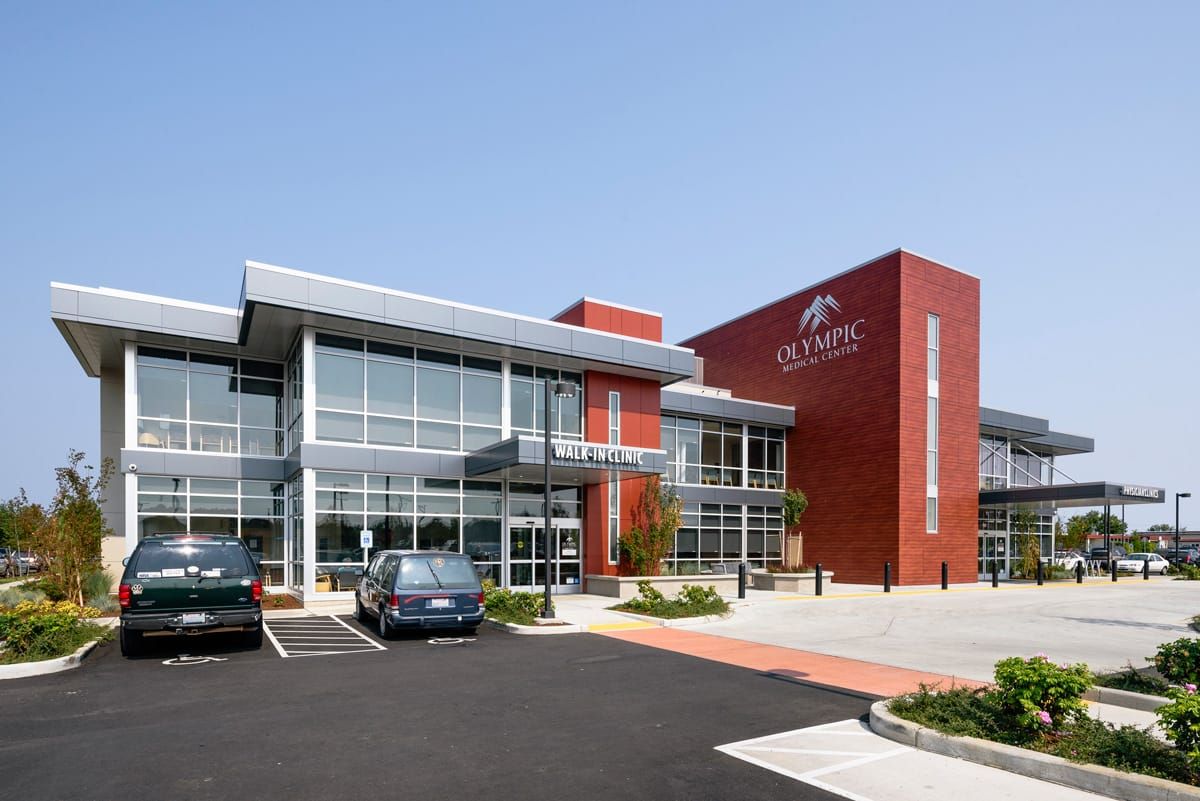
A lawsuit against Olympic Medical Center and seven hospital commissioners alleges they continued discussing a bond-refinancing proposal and met behind closed doors after an announcement that a scheduling oversight had put the special meeting out of compliance with Washington’s Open Public Meetings Act.
Arthur West filed the complaint Oct. 20, 2026, in Clallam County Superior Court, asking a judge to invalidate the board’s bond-refinancing resolution, impose civil penalties on individual commissioners and prohibit future violations.
The case is currently assigned to Judge Elizabeth Stanley.
The lawsuit centers on three July meetings and an announcement that, according to meeting minutes quoted in the complaint, commissioners could discuss the refinancing proposal but could not vote because of a scheduling problem.
West argues that distinction failed to account for a central requirement of state law: discussions and deliberations themselves constitute official action.
The defendants are Clallam County Public Hospital District No. 2, which operates OMC, and commissioners Phil Giuntoli, Tom Oblak, Nancy Field, Penney Sanders, Carleen Bensen, Gerald Stephanz and Thom Hightower. The complaint identifies Giuntoli as board president and Oblak as board secretary.
The complaint traces the board’s consideration of the proposal to July 15, when Interim Chief Executive Officer Mark Gregson presented information about the refinancing.
West alleges commissioners left a motion unresolved and deferred the decision to an unspecified future special meeting without entering or posting a continuance notice he contends was required by law.
The board reconvened July 27 at 4:01 p.m. in Linkletter Hall, with all seven commissioners present, the complaint states.
West quotes the board’s subsequently approved minutes as saying the meeting was affected by a “scheduling oversight not in keeping with the Open Public Meetings Act.” The minutes, as quoted in the complaint, continued: “therefore, commissioners could discuss but could not vote on the resolution.”
Despite that announcement, West alleges, commissioners discussed the refinancing, additional costs, legal counsel, payment parameters and when to meet again.
They also received a recommendation from the board’s Finance and Compliance Committee to sign the resolution at their next meeting, according to the complaint.
Washington’s law defines action broadly to include discussions, deliberations, reviews and evaluations of agency business. Its special-meeting provisions generally require at least 24 hours’ notice identifying the meeting’s time, place and business.
West argues the board therefore could not avoid the notice requirements simply by postponing its vote.
“The violations alleged herein were not inadvertent,” the complaint states. West contends the announcement put every commissioner on notice of the problem before they continued conducting board business.
The lawsuit separately challenges the executive session that followed.
According to the complaint, commissioners entered the closed session at 4:13 p.m., with the stated purpose of reviewing a public employee’s performance and an announced ending time of 5 p.m. The complaint says the session ended at 5:05 p.m., lasting 52 minutes. West alleges the presiding officer did not publicly announce an extension.
State law permits closed sessions to review a public employee’s performance during a regular or special meeting. It requires the presiding officer to announce the session’s purpose and ending time, and to announce an extension.
West argues the board lacked authority to hold the closed session because the underlying special meeting had not been lawfully noticed.
He also alleges the discussion exceeded the announced purpose, but the complaint does not identify specific additional subjects discussed behind closed doors.
Two days later, according to the complaint’s account of the minutes, all seven commissioners attended another special meeting and unanimously approved Resolution 573, the bond-refinancing measure. That meeting began at 10:05 a.m. and adjourned at 10:07 a.m.
The complaint says the minutes record no presentation, staff report, discussion, deliberation or public comment.
West alleges the vote ratified a consensus reached through unlawful deliberations July 27 or outside a lawful public meeting. He also challenges the notice provided for the July 29 meeting.
West argues the sequence deprived the public of a meaningful opportunity to observe deliberations or comment before approval.
The public-comment provision he cites, RCW 42.30.240, generally requires an opportunity for comment at or before regular meetings where final action is taken, although it does not impose that same requirement on every special meeting.
The complaint seeks a declaration that Resolution 573 and other actions taken at the July 27 and July 29 meetings are void. It also asks for court costs and an order barring future violations.
West requests penalties of $500 or $1,000 per violation against individual commissioners.
↺ Republish this story
Our stories are free to republish, online or in print, under these rules:
- Credit The Olympic Herald and the author, and link back to this story.
- Don't edit the story except for style, length, or to update time references.
- If you republish online, use our canonical URL so search engines credit the original.
- Don't sell the story or use it primarily to sell advertising.
Questions? Contact us.