
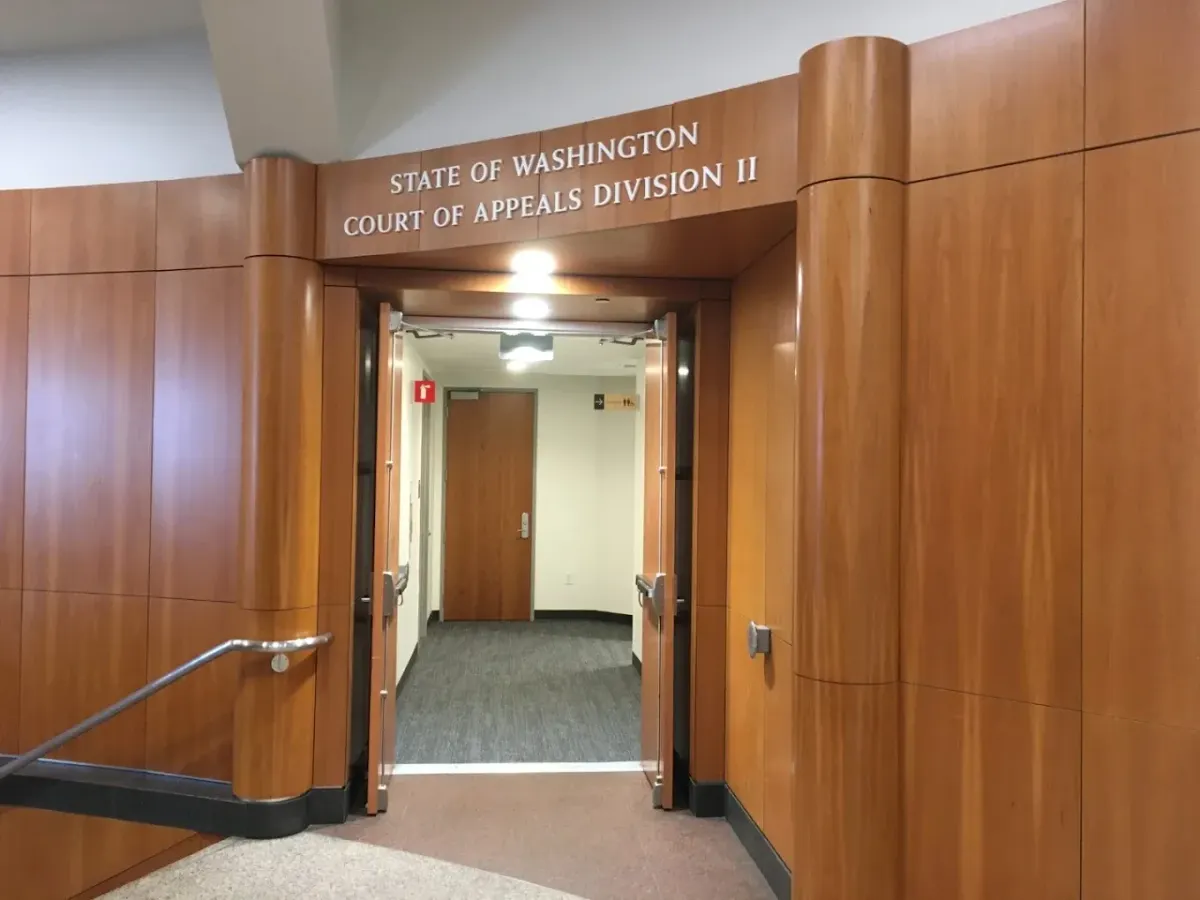
A state appeals court ruled Tuesday that the Bremerton School District did not violate the Public Records Act when it withheld an investigation report on its then-superintendent, even though the school board released the same report to the public about six weeks after a resident requested it.
The unanimous, unpublished opinion from Division II of the Court of Appeals leaves in place a Kitsap County Superior Court order signed by Judge William Houser. That order dismissed resident Eric Morley’s records claim against the district.
Morley was one of four district residents who sued, along with Lynn Horton, Bette Hyde and Ivaly Alexander, but only his request for the report was before the appeals court.
The report concerned former Superintendent James Crawford, whom the board hired effective July 1, 2023.
According to the opinion, then-board President Alyson Rotter began to suspect in the weeks before Crawford’s first year-end evaluation that he was reading board members’ emails about that evaluation.
When she asked him at the June 6, 2024, evaluation meeting, Crawford denied it and said the district’s technology made it impossible.
Rotter then learned from the technology department that Crawford had obtained access to district-wide email and had used it to read the board’s messages, the opinion said.
At a June 13 meeting attended by the district’s attorney, Crawford again denied reading the emails, and the board told him it had log reports showing otherwise. Crawford said he would not accept the findings of any investigation and that he needed a lawyer, according to the opinion.
Four days later, the district’s attorney retained investigator Jeff Ganson of the law firm Haggard & Ganson LLP, describing the assignment in writing as privileged attorney work product prepared in anticipation of possible litigation.
Ganson delivered his report July 9. He found that Crawford had viewed board members’ emails without their knowledge or consent, had repeatedly and falsely denied doing so, and had violated district policy.
Morley requested the report July 17. The district refused, citing the Public Records Act exemption for records that would be shielded from the opposing side in a lawsuit.
On Aug. 29, 2024, the board voted in open session to terminate Crawford’s contract. At the same meeting, it voted to waive the work product protection and release the report, and Morley was sent a link.
On appeal, Morley argued a trial was needed to decide why the district had really commissioned the report. He contended it was meant to give the board political cover for removing Crawford and to serve as leverage in separation talks.
Viewing the evidence in Morley’s favor, the appeals court agreed the record supported both points.
The opinion notes that the district proposed paying Crawford five months of salary, rather than the 12 months his contract provided if the board ended it unilaterally, and proposed dropping the investigation if he resigned and released his legal claims.
But a record created for more than one purpose can still be protected, Judge Rebecca Glasgow wrote. The question is whether the agency reasonably expected a lawsuit and whether the record would have taken substantially the same form without that expectation.
The panel said the district met that test on undisputed facts. Its attorney labeled the investigation as work product from the start, and the proposed separation agreement sought a release of specific claims, including breach of contract, discrimination and retaliation.
Crawford said in a declaration filed by Morley that he never threatened to sue and that the investigation was a political maneuver, not a neutral process. The court assumed that he did not intend a threat.
“An actual threat of litigation is not necessary,” Glasgow wrote.
Crawford did not dispute telling Rotter before his evaluation that the evaluation criteria would not hold up in court, the opinion said, or saying he would reject the investigation’s findings and hire an attorney.
Taken together, the panel said, that evidence supported the district’s belief that he was positioning himself for a lawsuit, whatever his actual intent.
The court also pointed to an unrebutted declaration from the district’s human resources director, who said most employee investigations were handled internally and outside investigators were used occasionally, often when the district saw potential for litigation.
The panel rejected Morley’s argument that the district forfeited the exemption by releasing the report.
Citing the state Supreme Court’s decision in Sanders v. State, the court said an agency that voluntarily discloses a record should not be penalized for it, and that the later release has no bearing on whether the earlier withholding was lawful.
Because the district properly withheld the report, the court denied Morley’s request for attorney fees on appeal. Judges Bradley Maxa and Meng Li Che joined Glasgow’s opinion.
↺ Republish this story
Our stories are free to republish, online or in print, under these rules:
- Credit The Olympic Herald and the author, and link back to this story.
- Don't edit the story except for style, length, or to update time references.
- If you republish online, use our canonical URL so search engines credit the original.
- Don't sell the story or use it primarily to sell advertising.
Questions? Contact us.